US midterm early voting passes 53 million as several states report sharp increases
Early ballots have exceeded the 2022 midterm total, with voting rising sharply in several states ahead of Tuesday’s election.
By Lorenzo Evans ·
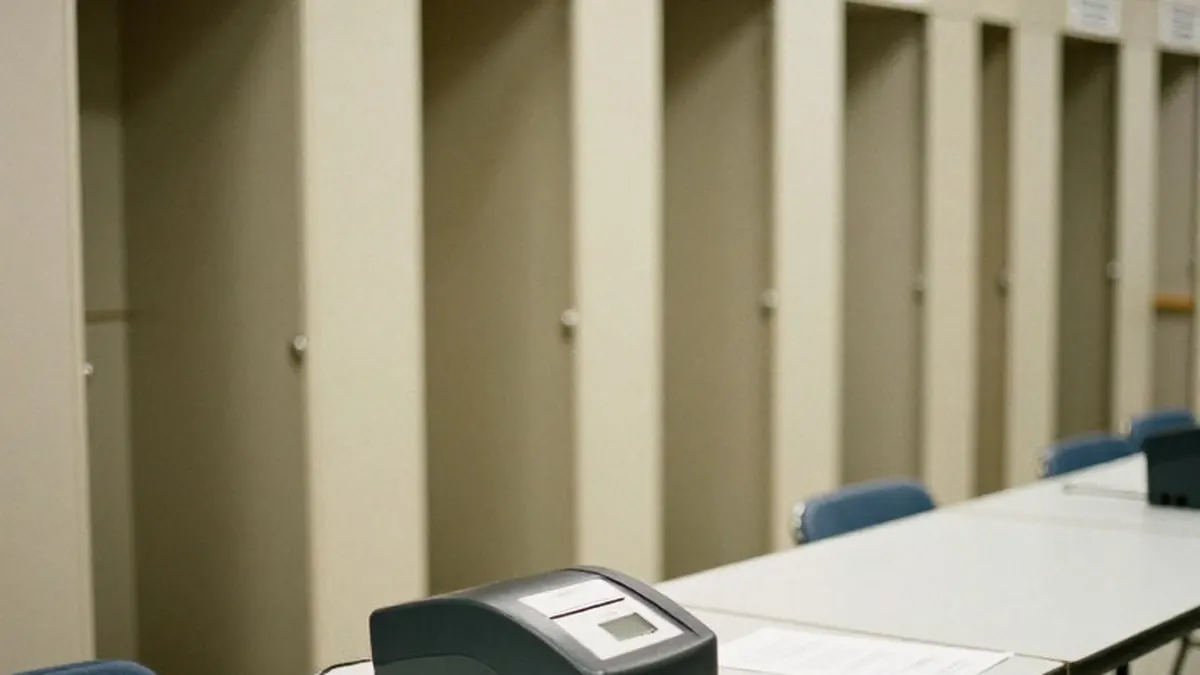
More than 53 million Americans had voted in the United States midterm elections by Sunday, November 1, according to a University of Florida analysis, surpassing the 46 million early ballots cast in the 2022 midterms. With two days remaining before Election Day, the university recorded 53.14 million early voters out of approximately 210 million registered voters.
The analysis included about 29 million ballots cast in person and 23 million submitted by mail. More than 11 million registered Democrats had voted early, compared with roughly 8 million registered Republicans. Those figures do not reveal which candidates received their votes or establish what the final election outcome will be.
The latest national polls put Democratic support at 51.5 percent and Republican support at 43.1 percent. President Donald Trump’s Republican Party has been hurt by his tariff policy and his decision to launch a war alongside Israel against Iran. Both policies have been blamed for contributing to a cost-of-living crisis.
Texas, a key battleground, recorded more than 7 million early voters, exceeding its 2022 midterm figure by over 1.5 million, according to the university. An Associated Press polling analysis found that South Carolina’s early voting was 83 percent higher than at the equivalent point in 2022. Trump won that state by nearly 18 percentage points in 2024, and it has open contests for governor and the US Senate this year.
Other states also reported substantial increases. In Kansas, where Republican Senator Roger Marshall faces Democratic Methodist minister Adam Hamilton, early voting rose 34 percent, or roughly 83,000 ballots, AP reported. Maine recorded a 44 percent increase as Republican Senator Susan Collins faces Democratic former state Senate President Troy Jackson. Michigan’s total grew by approximately 409,000 early votes, a rise of 32 percent.
The University of Maryland’s Center for Democracy and Civic Engagement identifies convenience, voter mobilisation and election anxiety among the reasons people cast ballots ahead of Election Day. Some want to finish the task as soon as possible, while others participate for social or cultural reasons. Community events and celebrations at polling locations can also encourage early participation.
Access to early in-person voting has expanded from 24 states in 2000 to 47 states and Washington, DC, in 2026, although voting periods, eligibility and procedures differ. Every state offers voting by mail. Eight states send ballots to all registered voters, while the others require voters to request them. Return deadlines also vary: some states require receipt by Election Day, while others accept later arrivals if they were postmarked by Election Day.
Trump has repeatedly questioned mail-in voting’s security, citing debunked allegations of widespread fraud, despite having voted by mail himself. The practice has existed for decades, has been found to increase turnout and accounts for a third of votes cast nationally. He has also falsely attributed his 2020 presidential election defeat to fraud involving mailed ballots.
In March, Trump signed an executive order directing the US Postal Service to design ballot envelopes with special barcodes intended to let the federal government verify voter eligibility. The change would have required states to adopt a uniform envelope format on a short timetable for the midterms. Legal challenges by Democrats and activists produced a series of rulings between May and August. In October, the Supreme Court rejected Trump’s effort to impose the restrictions before the November elections.
Source: Al Jazeera