US-Israel war on Iran drifts toward stalemate as Trump signals no rush for a deal
Analysts warn the conflict is hardening into an open-ended standoff, with a US naval blockade, attacks on shipping in the Strait of Hormuz and no peace settlement in sight.
By Lorenzo Evans ·
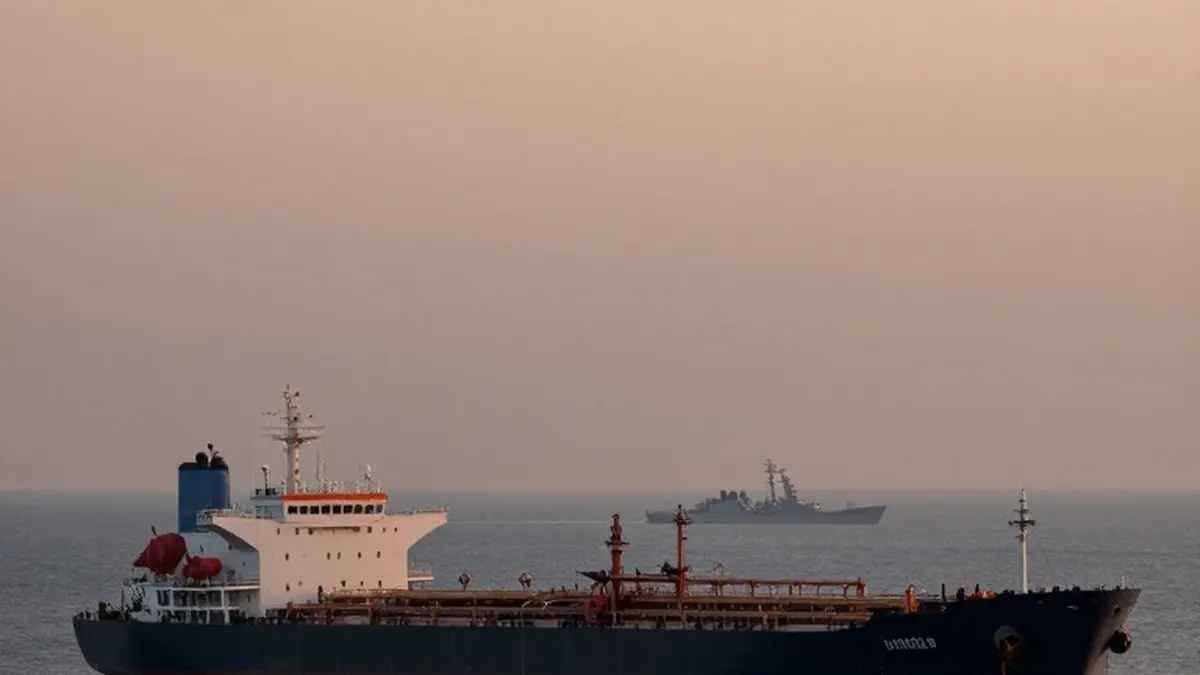
President Donald Trump has indicated that Washington feels little pressure to bring its war with Iran to an end. In a post on his Truth Social platform late last week, he wrote: "We don't need a deal with Iran. Those days have long since passed. We've got their money, Hundreds of Billions of Dollars, and we've got their Strait!", a reference to the Strait of Hormuz linking the Gulf to the open ocean.
In the same post, Trump instructed Vice President JD Vance to devote his "complete and total attention" to what he called corruption and crime in Democratic-run cities. Vance had led the negotiations with Iran that produced a short-lived truce in June. Trump has sent mixed signals in recent days, saying earlier last week that the war was "militarily .. effectively over" while adding that he "would not hesitate" to resume strikes should diplomacy fail.
The conflicting messages arrived after the Republican Party's heavy losses in the November 3 midterm elections, which Vance publicly blamed on the deeply unpopular war and its economic fallout, particularly soaring fuel prices. Observers say the divergence between Trump's remarks and Vance's criticism points to disagreement inside the party, with some in the administration comfortable leaving the conflict unresolved. That would mean keeping the US naval blockade of Iranian ports and sanctions in place, both red lines for Tehran, which has said it will not reopen the strait or return to peace talks until they are lifted.
On November 9, President Masoud Pezeshkian said Supreme Leader Mojtaba Khamenei had ordered officials to end the state of "neither war nor peace", adding that Iran was ready to negotiate but would not yield to coercion. Parliament Speaker Mohammad Bagher Ghalibaf, Iran's chief negotiator, told Al Jazeera that "the ball is now in the American court".
The war began in February with US and Israeli strikes on Iran. Talks in Pakistan produced a June memorandum of understanding that paused the fighting and briefly lifted the blockade, but the truce collapsed within weeks, largely over control of the Strait of Hormuz, and Washington reimposed its blockade on July 14. "Diplomatically, we are already there and have been since July," said Muhanad Seloom of the Doha Institute for Graduate Studies, though he cautioned that calling the conflict "frozen" flatters a situation featuring a blockade, more than one attack a day on shipping around Hormuz and strikes in both directions. "The war has changed form, from an air campaign to a siege," he told Al Jazeera, "and sieges end when the besieged side either breaks or breaks out."
Trump's room for manoeuvre is limited. An October Chicago Council on Global Affairs survey found nearly 70 percent of Americans believed the war was not worth fighting, and polls show deep opposition to deploying ground troops. After the midterm defeat cost Republicans control of Congress, Vance wrote on X that anyone who thought the war was worth "losing the Senate for the next 6 years" should say so openly. Yet ending the war on current terms is equally unappealing, since lifting the blockade and leaving the strait under contested Iranian control would leave Trump with nothing to show for eight months of war. According to Associated Press reporting, Trump has conceded that walking away with Iran's government intact would amount to a "defeat".
"Ironically, there is no military solution that does not involve a ground component," said Tallha Abdulrazaq of the University of Exeter's Strategy and Security Institute, noting public wariness of "another Iraq or Afghanistan". He said Trump wants a deal far beyond the 2015 nuclear agreement he abandoned in his first term, leaving him "stuck between a rock and a hard place". Any serious US escalation would most likely come within the next two months, before Democrats formally take control of Congress in January, with three carrier strike groups expected to remain in the region through December. Beyond that window, Abdulrazaq said, Washington would prefer "no war, no peace".
Iran faces its own bind. It has set seven conditions for a formal ceasefire, including lifting the blockade, sanctions relief, release of frozen funds and an end to hostilities on all fronts, while Ghalibaf has said the strait will "never return" to its pre-war toll-free status. The economy shrank 10.1 percent year on year between March and June, annual inflation hit 83.8 percent in September and the rial has repeatedly fallen to record lows. Seloom said Tehran's best option is a deniable move through security channels, possibly a Qatari-brokered formula restoring inspectors as the blockade lifts, while warning that American deaths, a Hormuz-driven fuel price shock or signs Tehran is moving its 440kg of highly enriched uranium could each shatter the siege.
History shows such stalemates can endure for decades. Korea remains technically at war more than 70 years after the 1953 armistice; eastern Ukraine's frozen front line held for nearly eight years before Russia's 2022 full-scale invasion; and Nagorno-Karabakh's quarter-century ceasefire ended when a stronger Azerbaijan retook the territory in 2023. Analysts say the closer parallels here are Iraq under embargo from 1991 to 2003, or the 1980s Tanker War, when Iran and Iraq attacked each other's shipping. Unlike most frozen conflicts, this one runs through a waterway that carried about a fifth of the world's oil and gas before the war, leaving both sides, in Abdulrazaq's words, "on the clock" economically. For now, Washington and Tehran each insist time is on their side, but history suggests frozen conflicts often outlast the leaders who let them freeze.