Iran Warns Shipping Vessels to Coordinate Passage in Strait of Hormuz After Mine Strikes
Two oil tankers hit naval mines in the Strait of Hormuz, prompting Iranian officials to urge international ships to coordinate with local forces while US President Trump praises the effectiveness of the naval blockade.
By Evelyn Adeyemi ·
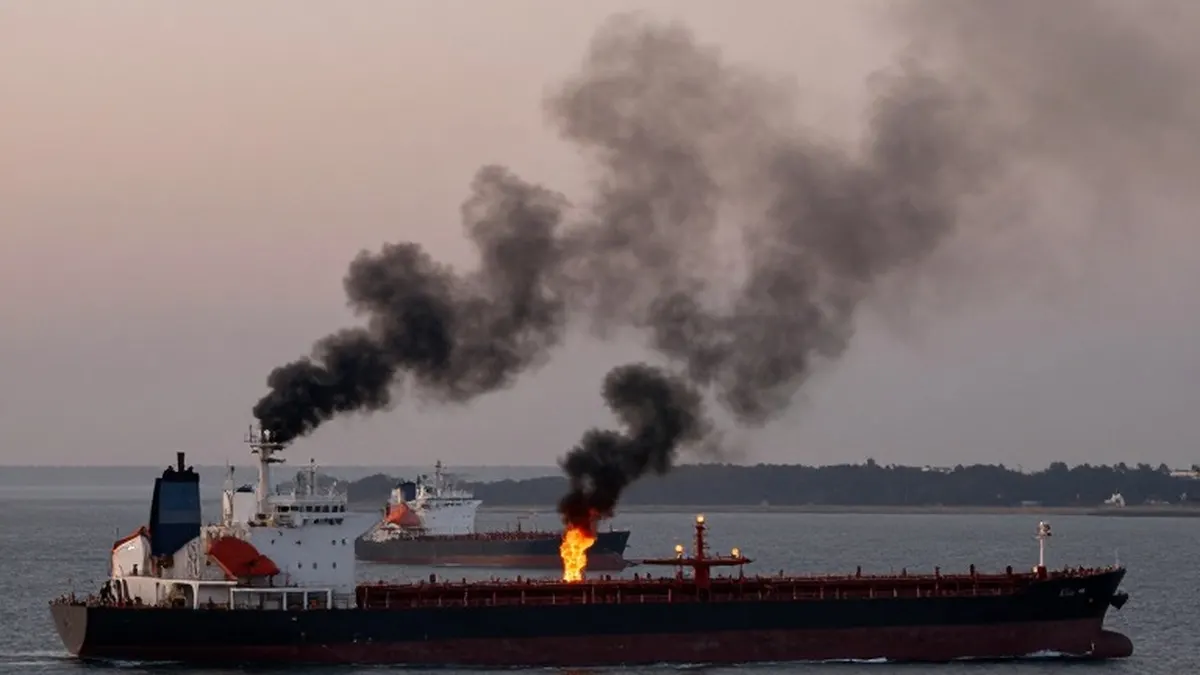
Two oil tankers were struck by naval mines and subsequently exploded and caught fire in the Strait of Hormuz on Wednesday. The incident was confirmed by the Iranian Revolutionary Guards Navy, which issued a statement through state media channels regarding the collision.
According to the statement, the two vessels were attempting to transit the critical waterway via a route that had not been authorized by Iranian authorities. The explosions marked a significant escalation in maritime tensions in the region.
In a separate announcement made on the same day, Mohammad Akraminia, the spokesperson for the Iranian Army, detailed recent military adjustments. He explained that the military had deployed new systems and upgraded existing infrastructure to enhance surveillance and control over the strait.
Akraminia issued a warning to international shipping, noting that vessels passing through the area without coordinating with Iranian forces have faced increased risks. He specifically cited the recent mine strikes as evidence of the dangers faced by uncoordinated traffic in the weeks leading up to the latest incident.
The diplomatic context for the warning is rooted in ongoing negotiations between Tehran and Washington. Iran has informed the United States that it will not restore normal shipping conditions through the Strait of Hormuz until its specific demands are satisfied. These demands include the lifting of the US naval blockade of Iranian ports and the end of the war on all fronts.
A proposal for resolution was conveyed through Qatari mediators. Under this plan, Tehran offered to reopen the waterway within 48 hours of Washington meeting the stated conditions. This timeline highlights the urgency both sides are placing on the maritime logistics issue.
US President Donald Trump reacted to the situation by hailing the ongoing naval blockade. He described it as the greatest naval blockade in history and asserted that more oil is currently moving through the Strait of Hormuz than at any point before the war began.
Trump also addressed the state of Iran's military power, claiming that the nation has little capacity to fire missiles. He stated that the Iranian army, navy, and air force have been badly weakened by recent conflicts. He noted that not one Iranian ship has managed to get through the blockade since its establishment, with the exception of a period he referred to as a little moratorium.
The President concluded his remarks by thanking US troops serving overseas. He specifically acknowledged the personnel working to ensure that Iran never obtains a nuclear weapon, linking the military presence to broader strategic goals in the region.