Houthis sustain war effort through diverse funding streams
Yemen's Houthi group finances its military operations through a complex mix of taxes, oil sales, and public contributions, tightening its grip on the country despite ongoing conflict.
By Evelyn Adeyemi ·
Mohammed, a 19 year old fighter who joined Houthi forces on Yemen's Red Sea coast in March, describes the frontline experience as one of steady supply and care. Despite facing pro government troops, Saudi led air strikes, and international sanctions, the group has managed to maintain logistical support for its soldiers. Mohammed noted that fighters are well fed, allowed to chew khat, and receive medical attention when injured. He emphasized that commanders ensure troops have the necessary supplies, allowing them to take moments of respite amidst the relentless fighting.
Over the past decade, the Houthi movement has constructed a robust financial infrastructure to fund its military campaigns and consolidate control over its territories. A report from the Mokha Center for Strategic Studies estimates that this system generates approximately 2.5 billion dollars in direct and indirect resources annually. This revenue is derived from multiple sources, including roughly 800 million dollars from taxes and customs, 600 million dollars from additional fees, 300 million dollars from cash and in kind war contributions, and about 100 million dollars linked to mobilization events.
A May research paper by the same institution indicated that nearly 60 percent of revenues collected in Houthi controlled areas are allocated to the security and military sectors. As the conflict continues, authorities have employed increasingly diverse techniques to raise funds. Ali Naji, a resident of Sanaa, receives frequent mobile messages urging him to contribute to the missile and drone forces. Although he does not always contribute, he observes that thousands of others do, often with small amounts that collectively amount to millions of dollars.
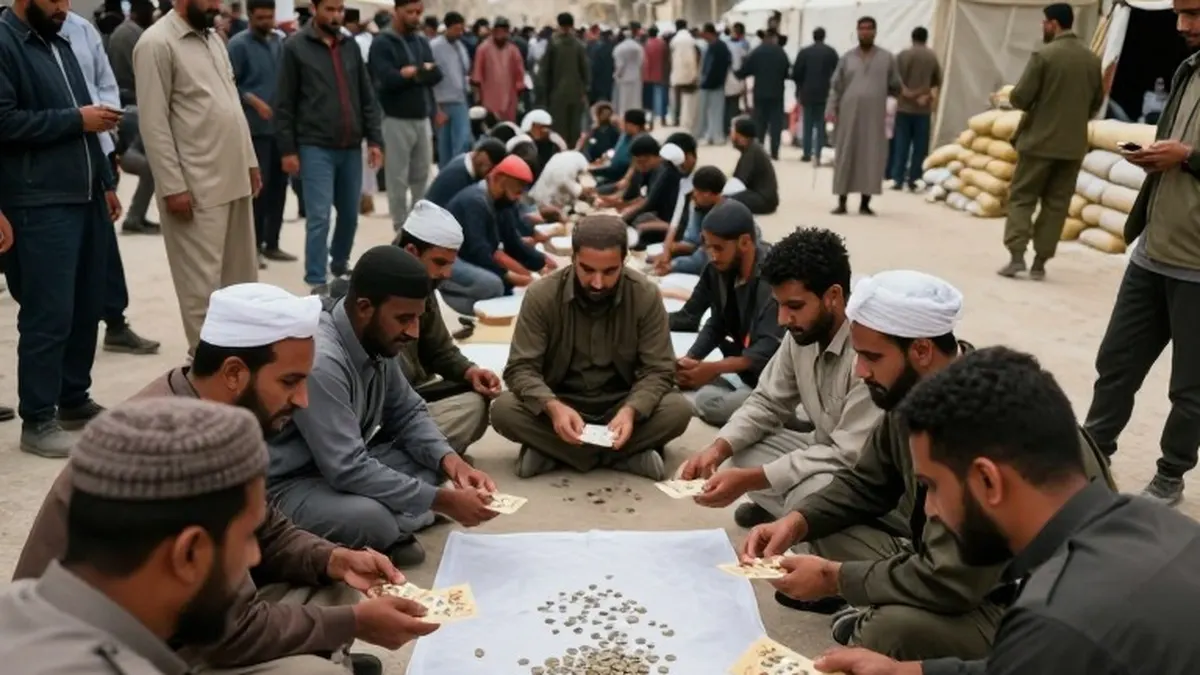
Public solicitation is a common practice. Naji described an instance where a Houthi member handed him an envelope during a funeral procession for civilians killed in air strikes. Feeling unable to refuse, he placed 1,000 Yemeni riyals, approximately 1.90 dollars, inside. During mass rallies, large sheets of cloth are spread on the ground for donations. People contribute cash or weapons, such as rifles and traditional daggers, with single events raising millions of riyals.
Imported oil remains a significant revenue stream. The US Department of the Treasury reported in January that the Iranian government provides monthly free oil shipments to the Houthis via companies based in Dubai. Through these shipments and illicit oil sales, the group generates over 2 billion dollars annually. Yazeed Al Jeddawy, a research manager at the Sanaa Center for Strategic Studies, described this as a self reinforcing system where economic control finances coercion, which in turn enables further economic control.
Al Jeddawy explained that the group leverages control over import permits, fees, and foreign currency access to exert influence over traders and businesses. These resources sustain the security apparatus and patronage networks that enforce compliance. The financial system also supports recruitment, which is crucial as employment opportunities shrink and public sector salaries go unpaid. For many young men, joining the Houthi forces has become one of the few reliable sources of income.
Recruitment is accompanied by ideological indoctrination, extending the movement's influence into families and local communities. A 2024 United Nations panel of experts estimated that Houthi fighters number around 350,000, including recruits sometimes under 18 years old. Al Jeddawy noted that these resources fund not only recruitment but also the expansion of the security apparatus and the development of sophisticated weapons, fortifications, and underground facilities.
The financial focus on the military comes at a cost to civilians. Wafiq Saleh, an economic researcher, stated that civilian institutions are starved of funds, leading to irregular salary payments and deteriorating health and education services. Approximately one million public employees in Yemen have not received regular salaries since 2016. Roughly 80 percent of the population lives below the poverty line, and nearly 22.3 million people depend on humanitarian assistance.
For fighters like Mohammed, funding military operations is viewed as a patriotic duty and a long term investment. He believes that liberating the country and expelling foreign forces requires financial commitment from every citizen, making the funding of fighters a top priority.