Harris Spends $1.176 Billion and Still Loses: The Data Behind the Money Argument
New claims challenge the notion that campaign spending determines election outcomes, pointing to recent midterms and presidential races.
By Khalid Khalil ·
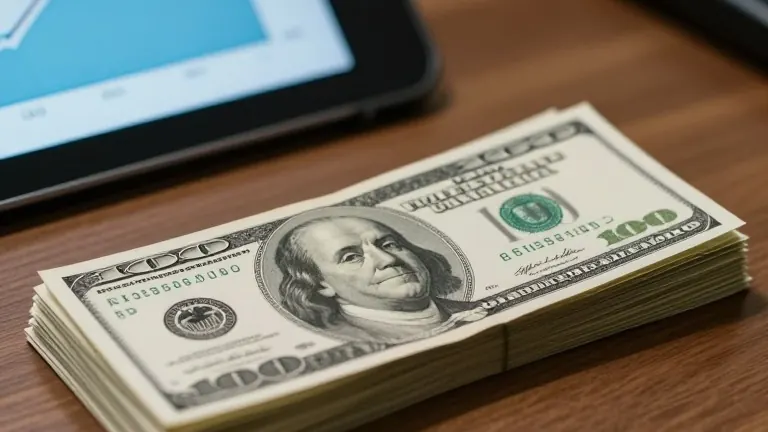
Kamala Harris and her affiliated committees spent $1.176 billion in the 2024 presidential race. She dramatically outraised and outspent Donald Trump, yet she lost the election.
Shaun McCutcheon, the plaintiff in the 2014 Supreme Court case McCutcheon v. FEC, argues these results prove money does not corrupt democracy. Writing for InsideSources.com, McCutcheon states that the current debate over campaign finance is fundamentally backward. He contends that in a country founded on free speech, restricting the resources used to exercise that right contradicts the First Amendment.
McCutcheon points to the 2016 election as further evidence. Hillary Clinton held a substantial financial advantage over Trump that year and also lost. He argues that if money bought elections, the results of the last two presidential cycles would look considerably different.
The argument extends to the recent midterm elections. Republicans and conservative-aligned organizations reportedly spent $2.6 billion in competitive races. Democrats spent $1.8 billion. Despite the spending disparity, Democrats took control of both chambers of Congress, though they did so with a loan against their headquarters.
McCutcheon highlights a perceived hypocrisy in the current political climate. He notes that Democrats frequently warn about the dangers of wealthy individuals influencing politics, particularly when those individuals support conservative causes. He asks where that outrage was when George Soros and affiliated organizations invested enormous sums in progressive candidates and causes. He asserts that both Soros and Elon Musk have the right to spend their money advocating for their beliefs.
The author argues that campaign finance restrictions often benefit institutions that already dominate public debate. He claims that progressives enjoy considerable institutional advantages in media, academia, and entertainment. Restricting political spending, he says, makes it harder for outsiders to challenge conventional thinking. He maintains that the real constraint on political influence is the willingness of voters to listen, not the size of a single check.
McCutcheon concludes that spending is a reflection of support rather than a substitute for it. He states that the government should not decide which Americans have too much money to speak or which messages deserve a larger audience. The First Amendment, he argues, has no financial ceiling or party affiliation.