Digital Connectivity: The Rise of Intolerance for Not Knowing
New data from 137 studies shows a sharp increase in discomfort with ambiguity, a trend researchers link to the immediate information access provided by smartphones.
By Evelyn Adeyemi ·
The ability to tolerate ambiguity is becoming a rare skill. A meta-analysis of 137 studies conducted by Jeroen van Baar, a psychiatric epidemiology researcher at the Boston University School of Public Health, reveals that average scores for intolerance of uncertainty have risen substantially among college students since the 1990s. This metric tracks individuals whose reaction to not knowing an outcome is disproportionately intense relative to the situation.
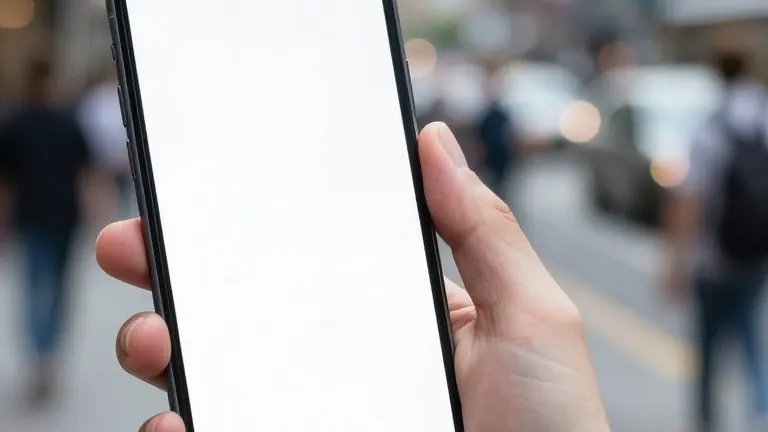
Van Baar suggests that modern technology is a primary driver of this shift. Smartphones allow users to resolve trivial questions and maintain constant contact, effectively removing the daily micro-practices of uncertainty. As van Baar noted, having mobile devices in our pockets allows us to know almost everything instantly. This convenience has reduced the opportunity to experience that one can function and feel safe while remaining in the dark.
The psychological impact of this shift is measurable. Michel Dugas, a psychology professor at the University of Québec in Outaouais, describes uncertainty as a fundamental component of relationships, health, and finances. He argues that learning to manage the lack of information is a basic skill required for a high quality of life. When this discomfort crosses into daily anxiety, professional intervention can help. Treatments often involve behavioral experiments that safely expose patients to unknown outcomes.
One such patient, who experienced intense distress regarding academic grades, was instructed to wait 48 hours before checking a posted test result. According to Dugas, the initial panic was severe but diminished significantly by the second day. He emphasizes that new learning occurs only when a person experiences the specific fear they have been avoiding. Smaller daily exercises, such as leaving a phone at home or making low-stakes decisions without seeking reassurance, can build this tolerance.
Nick Carleton, a psychology professor at the University of Regina in Saskatchewan, explains that discomfort with uncertainty exists on a continuum. While some caution is evolutionary, an excessive fear of the unknown can be debilitating. Carleton notes that people who loved uncertainty too much likely perished in dangerous situations, while those who feared it too much likely starved. The goal is to find a balance where one can acknowledge negative emotions without being paralyzed by them.
Ryan Jane Jacoby, a clinical psychologist at Massachusetts General Hospital, advises shifting from problem-solving to acceptance when a situation is beyond one's control. She suggests narrowing possibilities to three or four reasonable options and resisting the urge to reconsider the decision repeatedly. Jacoby recalls that children often embrace surprises, whereas adults tend to worry about potential negatives. She believes that remembering this early openness can help adults manage the curveballs of life.
Pema Chodron, an American Buddhist and author of Comfortable with Uncertainty, writes that practitioners accept that they can never know what will happen next. She describes this not-knowing as part of the adventure. For those struggling with the constant flux of modern life, the challenge is to accept that the universe is inherently uncertain. As Dugas concludes, an inability to deal with this reality makes it difficult to achieve happiness and maintain a good quality of life.