Cuba welcomes back diplomat expelled by US after 130-17 UN vote
Richard Tur de la Concepción returned to Havana following a public dispute with US representatives during the General Assembly session on sanctions.
By Lorenzo Evans ·
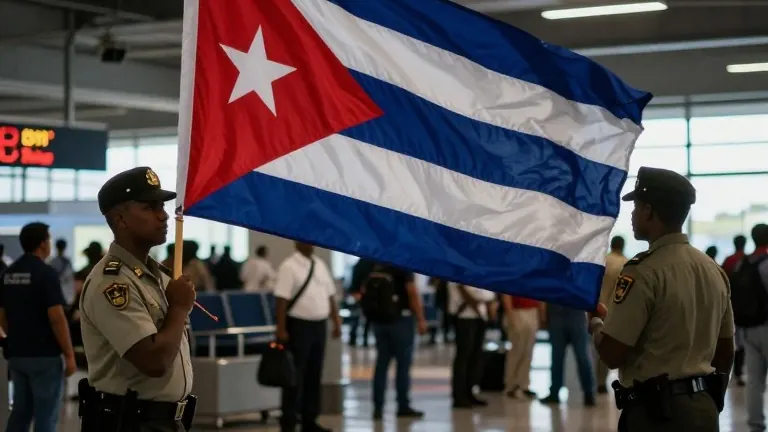
Cuban diplomats returning to their home country now carry a formal endorsement from the state after a public confrontation in New York. Richard Tur de la Concepción, who served as the first secretary of Cuba’s mission to the United Nations, landed at Havana airport on Friday. He was greeted by senior officials from the Ministry of Foreign Affairs, who held a Cuban flag for photographs.
Gerardo Peñalver, the first vice foreign minister, posted the images on X and described the return as a homecoming for the young diplomat. He stated that Tur faced the "disrespectful and provocative attitude" of the US delegation with dignity and firmness. Peñalver accused the US staff of trying to disrupt the vote on a resolution opposing the US embargo and to block Tur’s candidacy for a key UN body.
The incident began on Tuesday during a plenary session of the General Assembly. US representatives alleged that Tur pushed a colleague and attempted to take the phone being used to record the proceedings. The dispute escalated into a shouted exchange between Mike Waltz, the US representative to the UN, and Cuban Foreign Minister Bruno Rodriguez. Waltz announced the expulsion, which the US State Department later confirmed.
Tur, who thanked the island for its reception on X, wrote that Cuba would prevail over US arrogance. The diplomatic row occurred against the backdrop of rising tensions between the two nations. In January, President Donald Trump imposed an energy blockade on the island, a measure aimed at forcing changes in the Cuban government and its political model.
The session concluded on Wednesday with the adoption of the resolution proposed by Cuba. The General Assembly voted 130 in favor, 17 against, and 25 abstentions. The document is presented annually at the multilateral forum and does not carry binding legal force.
Peñalver maintained that the US actions were part of a strategy to hinder the voting process. The resolution specifically targeted the US sanctions against the island, a central point of contention in the bilateral relationship for decades.
Source: Daily Southtown