Cincinnati orchards aim for 10,000 pounds of fruit
Local volunteers expect to double the harvest in two years as they plant trees in neighborhoods across the region.
By Khalid Khalil ·
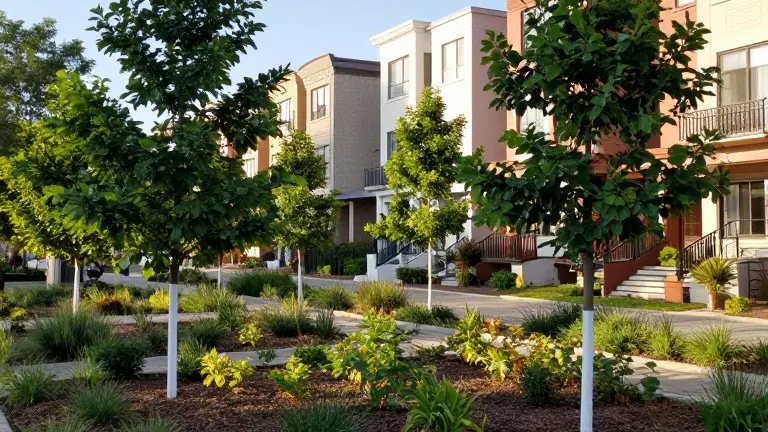
Residents in Cincinnati and Newport, Kentucky, will have access to roughly double the amount of locally grown fruit in the coming years. Chris Smyth, the founder of The Common Orchard Project, projects that the region's small orchards will produce about 10,000 pounds of fruit within the next two years. This output would double the current harvest and include peaches, apples, pears, and less common varieties such as paw paw and persimmons.
Smyth and volunteers have planted more than 40 orchards over the last nine years. These sites are located in public green spaces and on private lots where fruit trees are within walking distance of at least 1,000 people. The project operates in neighborhoods where fresh produce can be difficult to obtain or afford. In one area of Newport, the per capita income is approximately $26,000 annually, according to U.S. Census data.
The planting efforts rely on a network of volunteer stewards who maintain the trees. Jessica Wieman, who tends an orchard on a lot in northeast Cincinnati, said the role requires weeding, pruning, and monitoring the plants for disease. She noted that while young trees require intensive care, the design of these food forests aims to reduce long-term maintenance compared to conventional crops.
Ben Stockwell has stewarded an orchard on the north side of Cincinnati for three years. He reported that the 2026 harvest ended four weeks early due to summer heat and rain. Only two persimmon trees remained to be picked at the time of the report. Stockwell said local production is becoming necessary as extreme weather disrupts global supply chains.
Smyth emphasized that the goal is to grow food rather than just plant trees. He said the visible presence of healthy fruit in neighborhoods helps build trust among neighbors. The orchards include signs with photos and instructions in English and Spanish to guide residents on how to harvest the produce.
Anne C. Bellows, a professor of food studies at Syracuse University, described these food forests as systems that mimic natural ecosystems. She said the plants support pollinators and other wildlife while providing food for humans. Bellows noted that many of these sites are in areas with low tree cover and high rates of food insecurity.
A 2025 study published in the journal Sustainability found that food forests can lower local temperatures. The maximum temperature in a food forest was 2.2 degrees Celsius lower than in the surrounding urban area. This cooling effect helps mitigate the impacts of extreme heat in cities.
Volunteers in Newport, such as Paula Cely and Kyle Randall, plant trees in areas where residents often skip buying fresh vegetables due to cost. Randall said having free access to fresh fruit is a major benefit for their household. Smyth said the project will continue to expand if demand for the fruit remains high.
The orchards also serve as a source for local food banks. Stewards donate fruit that is not harvested by the community. Smyth stated that the project aims to help communities become more self-sufficient in their food sources. The network of orchards is designed to support a diverse range of plant and animal life.
Smyth acknowledged that these local systems will not replace the global food supply. He said the orchards are intended to empower communities to address structural changes in the economy. The project focuses on creating spaces where neighbors can connect through the shared work of tending the land.