Blue Planet III retains murky footage to verify reality
Producers explain that imperfect visuals serve as a safeguard against artificial intelligence fabrication in the new nature documentary series.
By Evelyn Adeyemi ·
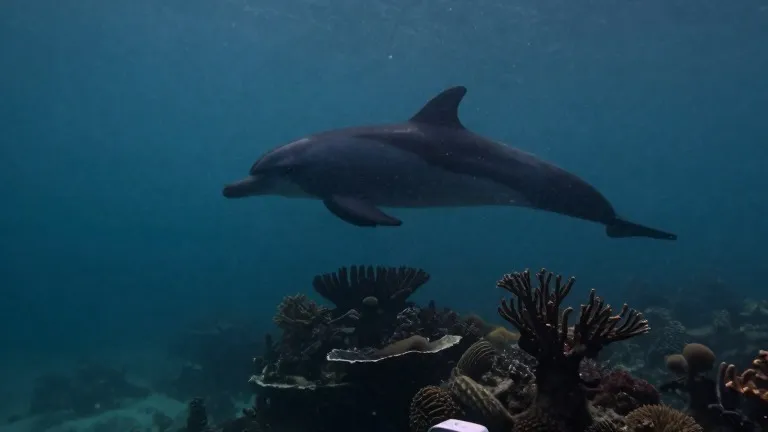
Executives for Blue Planet III, the new BBC nature series narrated by David Attenborough, have deliberately preserved cloudier and less polished footage in the final edit. The production team stated that this approach aims to reassure viewers that the imagery is authentic at a time when artificial intelligence fabrication is increasing.
The series arrives nearly a decade after Blue Planet II and 25 years after the original broadcast. BBC Studios promises the new installment will feature more animal behavior and advanced technology, including the world's first underwater CCTV camera, which the team has nicknamed the stonefish cam.
Executive producer Elizabeth White explained that the rise of AI has driven the team toward a more organic visual style. She noted that deep ocean animals are likely more remarkable than AI can imagine and that the footage is completely real. White said that in previous series, sequences with plankton or poor water conditions were often discarded, but those details are now retained to emphasize authenticity.
Jack Bootle, the BBC's head of specialist factual commissioning, provided a specific assurance to journalists at a press screening. He stated that no generative AI was used in the series and that not a single frame was artificial. He described the programme as bursting with novel behavior during what he called a golden age of natural history-making.
New footage includes dolphins using sea sponges to trap fish, a behavior recorded by the programme's director, Yoland Bosiger. Other scenes show groupers communicating with other fish species, 200,000 crabs forming feeding lines, and sea urchins using shells for shade. A penguin sequence also draws a parallel to the iguana and snake footage from Planet Earth II.
Filming lasted four years across five oceans. Series producer Lara Bickerton said the team built a mini-dome camera to follow an octopus and created a deep-sea selfie stick. Camera operators used leg-mounted scooters for immersive diving footage and lasers to capture deep-sea animals. The series also examines climate impacts, such as warmer seas killing the sea anemones where clownfish live, and continues the theme of plastic pollution with a focus on forever chemicals.
Attenborough, who is 100 years old, was involved in changing scripts and remains excited by new footage. White noted that the series saved money by using more local crews on location than previous installments. Blue Planet III begins airing on BBC1 and iPlayer on Sunday, 1 November.
Source: The Guardian