Texas Muslims push voter turnout as election rhetoric raises local concerns
Ahead of the November 3 midterms, Muslim voters in Texas are organising around concerns about discrimination, education and Republican efforts targeting Islamic practices.
By Lorenzo Evans ·
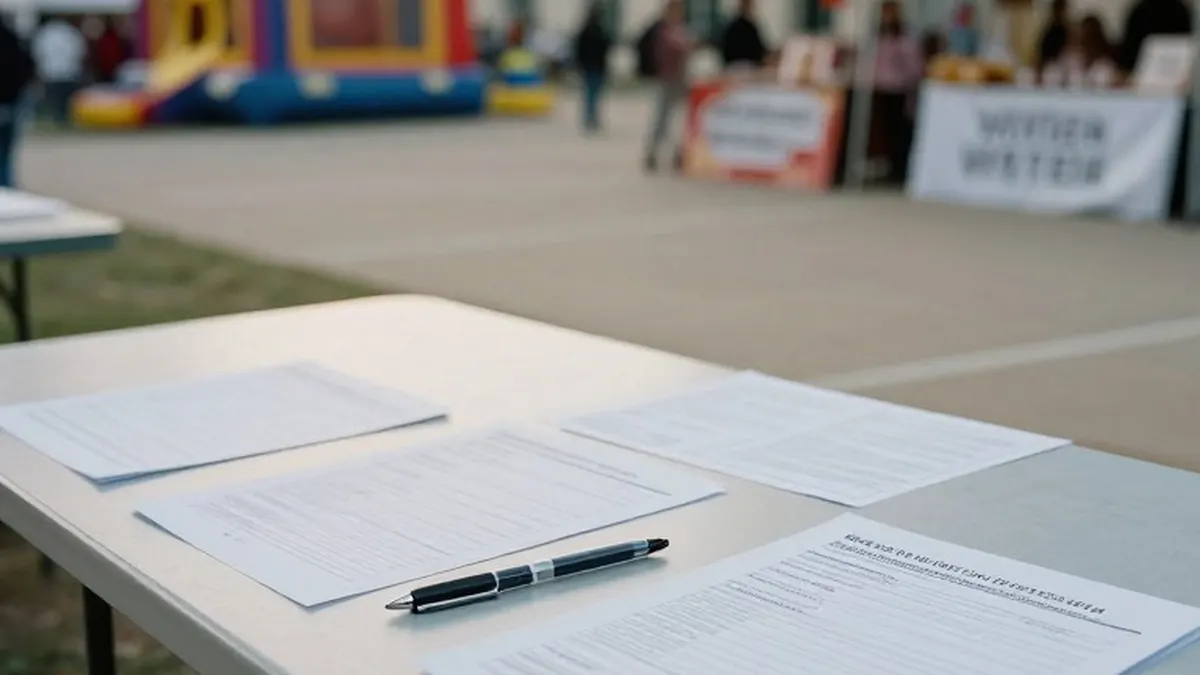
For Muslim voters in Texas, the closing days of the United States midterm campaign have brought concerns about how political rhetoric affects their families, schools and community institutions. While growing Islamophobia has targeted Muslim candidates nationally, including Michigan Democratic Senate hopeful Abdul El-Sayed, Texas residents say their local stakes are substantial even without a Muslim candidate on the statewide ballot.
At a fall festival at a Houston Islamic centre shortly before the November 3 election, lawyer Samir Nadjam said the impact was clearest through his children, who encounter remarks at school influenced by what other families watch in the news. Mariam Ahmed, a 42-year-old physician, told Al Jazeera that the atmosphere had led her to consider leaving the country within the past two years. She feared her child would face the same prejudices she had experienced.
Muslims represent less than two percent of the state's population, but organisers hope greater participation will strengthen their political influence. The Islamic Society of Greater Houston, which oversees more than 30 mosques, substantially increased its voter registration efforts this year. Its president, Emran Gazi, said religious leaders had encouraged voting during Friday prayers. The society does not endorse candidates, instead asking members to vote according to their consciences.
Republican Governor Greg Abbott and other party leaders have portrayed Sharia, a broad term encompassing Islamic customs and practices, as a threat to Texas. Abbott promised a full ban at a Dallas convention in October, while Senator Ted Cruz argued that Islamic law conflicts with the Constitution. The state party adopted a platform in June proposing penalties for its proponents. A Texas legislative caucus opposing Sharia now has 38 members, while a congressional counterpart founded by Texas Representatives Chip Roy and Keith Self has grown to 68.
No jurisdiction in Texas or elsewhere in the United States has enacted Islamic law. Rights monitors say officials have misrepresented cases involving a proposed Muslim-centred housing development and voluntary Islamic arbitration. In a February report, Georgetown University's Bridge Initiative said politicians were increasingly depicting Muslim participation in civic affairs, population growth and community development as signs of an encroaching threat.
Muslim Republicans have also faced hostility. The Texas Tribune reported that outgoing state party chair Abraham George told two Muslim delegates at the June party convention to leave the party. An unnamed Muslim Republican who attended told Al Jazeera the experience was hurtful. Although he remained active locally and shared Republican business and family values, he said he would omit some of the party's candidates from his ballot.
The disputes extend to legal action. Abbott, who faces Democrat Gina Hinojosa, has sought to designate CAIR Texas as a foreign terrorist organisation. Attorney General Ken Paxton, competing against Democrat James Talarico in a tight Senate contest, has sued CAIR to halt its operations in Texas. CAIR Texas has challenged Abbott in court on constitutional speech and expression grounds.
Organisers say linguistic diversity and stronger community engagement in local elections complicate statewide mobilisation. A recently approved high school curriculum has nevertheless galvanised concern, with critics saying it overemphasises radical Islam and misrepresents the prophet Muhammad. At the Houston festival, CAIR Action organiser Sameeha Rizvi urged attendees to register and vote, while challenging the belief that staying quiet would protect the community from the pressures it faces.
Source: Al Jazeera