Router failure during routine upgrade forced US flight ground stop, officials say
A maintenance job on ageing communications equipment, not a cyberattack, triggered the longest nationwide US flight halt since 9/11 and stranded tens of thousands of travellers.
By Evelyn Adeyemi ·
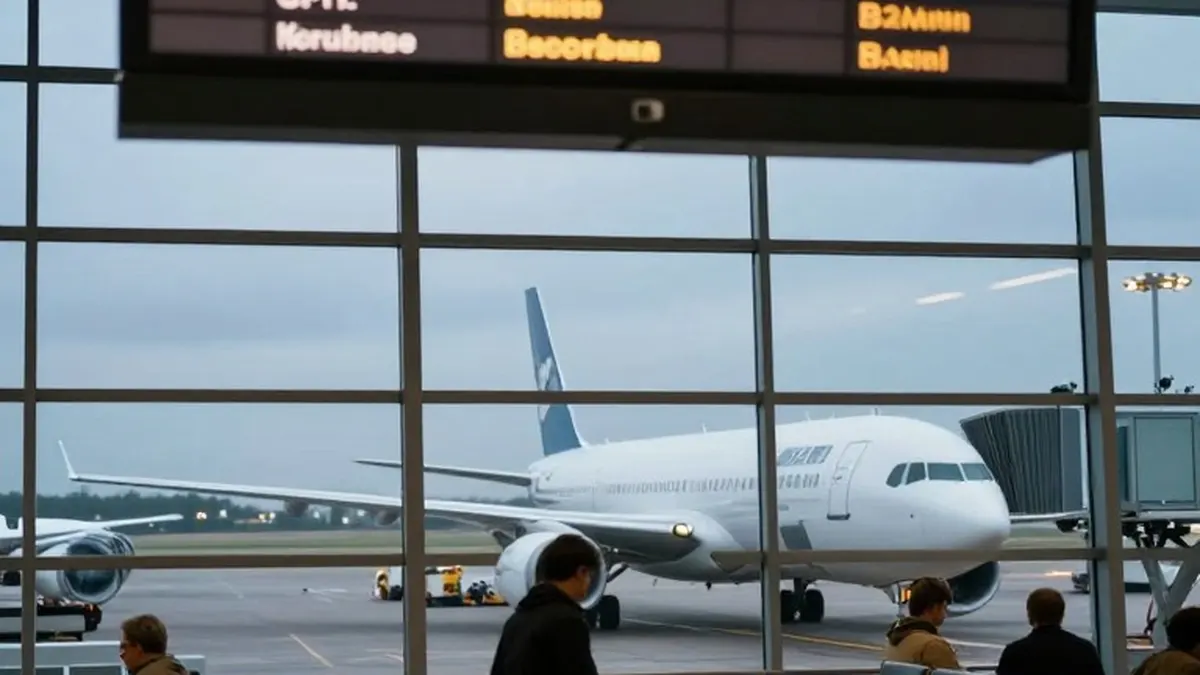
Airlines across the United States spent the weekend trying to restore normal schedules after a nationwide ground stop on Friday, the longest such halt since the attacks of September 11, 2001, and only the second in the country's history.
More than 5,000 flights were cancelled on Saturday, on top of over 9,000 scrapped a day earlier, as airports and carriers wrestled with heavy backlogs. The Federal Aviation Administration ordered the stoppage at 3:54pm East Coast time on Friday, citing a telecommunications outage affecting air route traffic control centres, and lifted it at 8:15pm. Aircraft already airborne were allowed to continue to their destinations, while international flights were handled on a case-by-case basis.
The sudden shutdown initially fuelled speculation of a cyberattack, and White House officials convened an emergency meeting in the Situation Room on Friday. Officials have since ruled that out. "Once we were able to isolate the work being done at this location, all of our systems came back online," Transportation Secretary Sean Duffy said. "So we don't believe this was cyber at all." FAA Administrator Bryan Bedford added there was "zero evidence of anything nefarious and zero evidence of anything AI-related".
Instead, officials said, the disruption began with routine maintenance. L3Harris, an aerospace and defence contractor, was replacing a section of old, discontinued copper wiring with new fibre optic lines at a remote location on Friday afternoon when a router there began overloading the air traffic control system, causing intermittent communications and radar gaps. Unable to pinpoint the cause of the overload, officials grounded flights nationwide.
Duffy said "contractor error or a faulty piece of equipment" caused the router to start flooding others, describing "1,000 connection attempts every four to five seconds". The problem disrupted communications at 17 of the FAA's 22 en route centres. The Professional Aviation Safety Specialists union said the issue was isolated to two routers updated on Friday, and an official told the Reuters news agency they were believed to be in Arkansas and Texas. The union said the technicians it represents were not involved in the upgrade.
Duffy faulted L3Harris, which he said had done decades of work for the FAA, for a failure at a critical moment, saying the company "didn't meet the moment". "They own this network. They're our prime contractor. I can't go somewhere else. They own it," he said. "Frankly, we're going to hold people accountable." The New York Times reported that three-fourths of the company's revenue comes from US government contracts, largely from the military.
L3Harris told Al Jazeera it has been working "in close coordination with the FAA", that safety and reliability are its "highest priorities", and that it takes the November 13 ground stop and its impact on travellers, airlines and air traffic operations seriously. The company said it has completed more than 70 percent of a planned conversion of airspace communications from legacy copper wires to a fibre optic system. The FAA said it is doing additional testing with the contractor to check for any further risks.
The episode has renewed scrutiny of ageing technology and a shortage of several thousand controllers that have long troubled the US air traffic control system. Duffy on Friday called for $50bn in funding to modernise the systems, up from an earlier request of $30bn, after Congress approved $12.5bn last year.
For passengers, the recovery may take time. Bedford said crews and aircraft are out of position for the 12,000 flights that were lost, though he believes "the worst is behind us". Duffy said airlines were expected to restore their full schedules by Sunday night. Tens of thousands of people remained stranded in airports across the country, some paying surge prices for hotels and rental cars, while airlines issued waivers allowing affected passengers to rebook for later dates at no cost.