CBO report warns Aukus submarine deal will strain US Navy for decades
A new analysis for the US Congress suggests that transferring nuclear-powered submarines to Australia will reduce the American fleet's operational capacity for many years, raising questions about the alliance's long-term sustainability.
By Lorenzo Evans ·
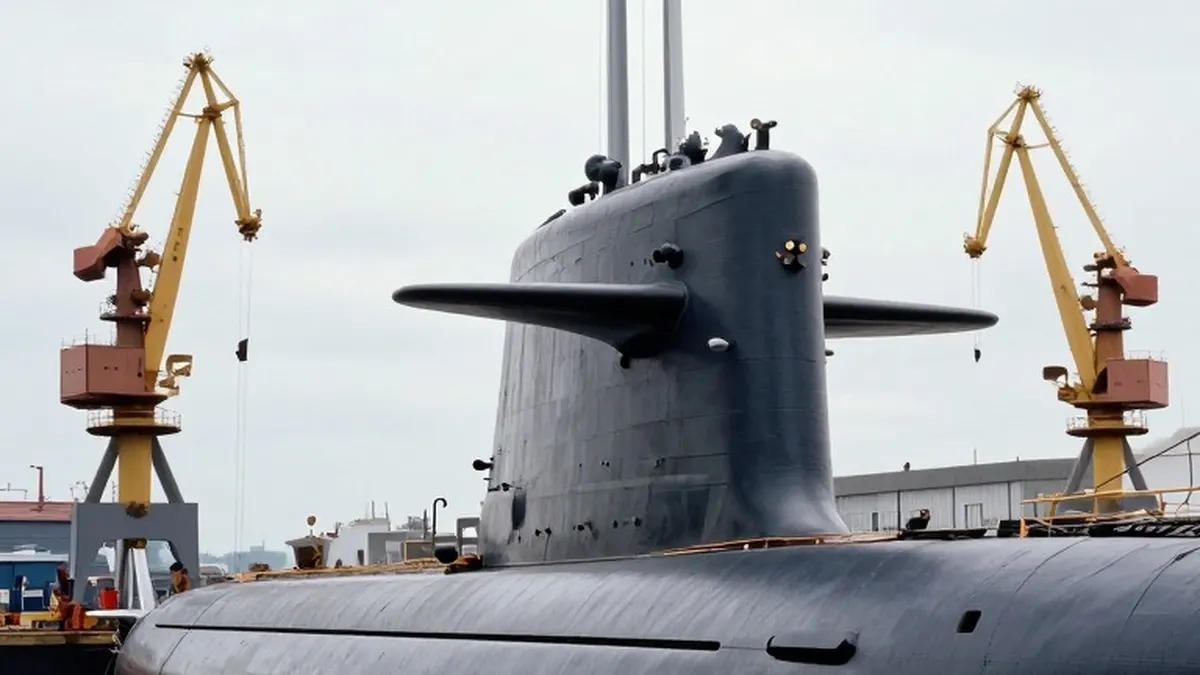
A new report prepared for the US Congress has cautioned that providing nuclear-powered submarines to Australia will diminish the US Navy’s own fleet for many years. The analysis questions whether vessels flying the Australian flag could be compelled into service in the event of a conflict with China. The report highlights significant concerns regarding the industrial capacity required to maintain the US fleet while fulfilling its international commitments.
The US Navy’s latest shipbuilding plan does not fully account for the Aukus agreement in its primary forecasts. According to the report, the plan only notes in a footnote that the transfer of any Virginia-class submarine to Australia has not been factored into the overall strategy. This omission underscores the tension between current planning and future obligations under the trilateral security pact.
The Congressional Budget Office released its detailed analysis on Friday morning, finding that the US submarine industrial base is currently struggling to meet the Navy’s existing demand. The report states that increasing production further to replace attack submarines sold to Australia would exacerbate the challenges already faced by the Navy and its shipyards. Consequently, the sale of these vessels would reduce the number of attack submarines available to the US Navy for an extended period.
Under the first pillar of Aukus, the United States has agreed to sell between three and five in-service Virginia-class submarines to Australia, with transfers set to begin in 2032. However, the CBO analysis raised doubts about the strategic utility of these transfers. It asked whether China would be less deterred if the US reduced the number of its own attack submarines to help Australia develop its own force.
The report argues that the robust alliance between the two nations means that boosting the Australian Navy’s fleet could help offset the US Navy’s potential loss of capability. Because Australian submarines would be based in the Western Pacific, they could respond more quickly to conflicts over Taiwan or issues in the South China Sea. Nevertheless, Australia would retain control of its own vessels, meaning their participation in any specific conflict would not be guaranteed.
In 2023, Australian Defence Minister Richard Marles stated that Australia would make no promises to deploy its submarines in support of a US conflict with China. He emphasized that future Australian submarines would be under the complete control of the Australian government of the day. This stance aligns with the CBO’s observation that Australian command over its fleet introduces a variable into US strategic planning.
Submarine building rates in the US have lagged significantly in recent years. Current shipyards are producing Virginia-class submarines at a rate of 1.13 per year. To service America’s own needs, this rate needs to rise to two per year. To have additional boats available for transfer to Australia, the production rate would need to reach 2.33 per year. The CBO noted that building times have lengthened considerably, with the process now taking an average of 10 to 11 years compared to five or six years in the 2000s.
US legislation governing Aukus allows the president to transfer a submarine to Australia only if losing that vessel will not degrade US undersea capabilities. The US can refuse to transfer any submarines without penalty under the agreement’s terms. Critics argue there is little chance the US will have the capacity to sell in-service submarines to Australia. Former foreign affairs minister Bob Carr has described the situation as both countries living a lie, noting that it has become conventional wisdom in Washington and Canberra that the deal may not proceed as planned.
Despite these concerns, the deal enjoys broad bipartisan political support in both nations. Marles recently affirmed that Aukus is proceeding and that the alliance continues unimpeded. US Secretary of Defense Pete Hegseth also affirmed support for the agreement in September, citing the commitment to strengthen deterrence in the Pacific. The US Congressional Research Service has considered an alternative division of labor where US-commanded submarines operate out of Australian bases, a model that could allow for immediate deployment in a crisis compared to Australian-commanded vessels.