Ukrainian electricians repair power grid under constant drone threat
In southern Ukraine, energy workers navigate intense aerial attacks to restore electricity for residents as winter approaches.
By Khalid Khalil ·
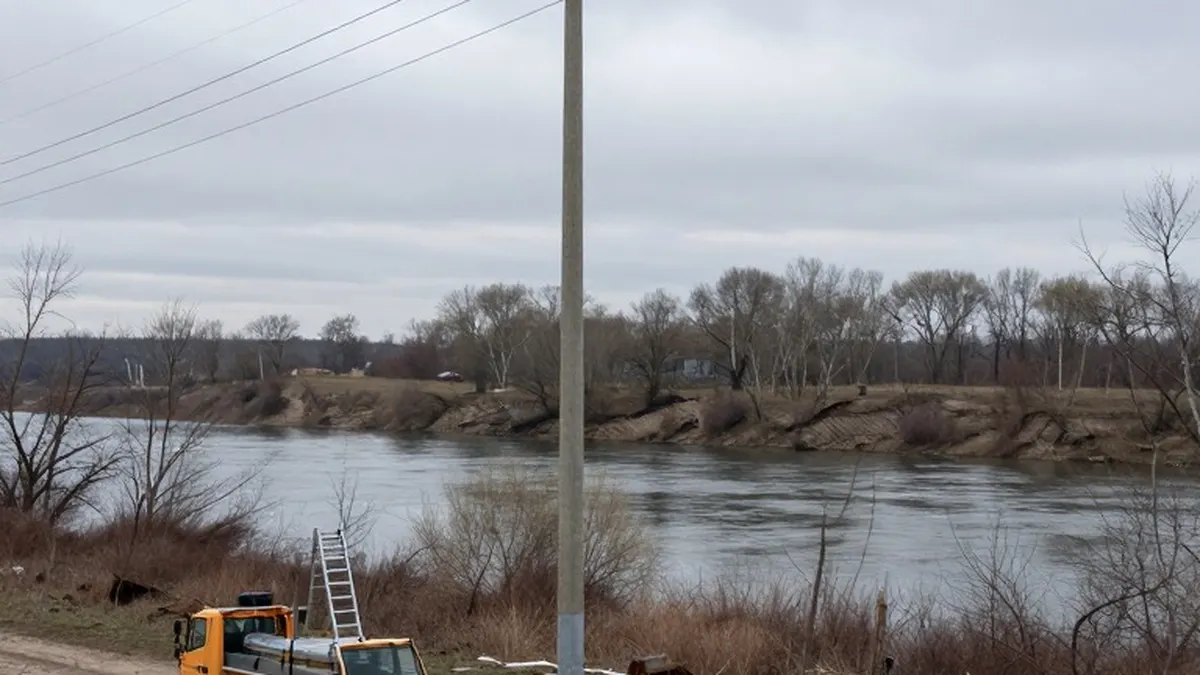
Maksym, a foreman for DTEK Dnipro Grids, begins every repair mission with a single priority: locating a place to hide. Working in Nikopol, a city in southern Ukraine situated along the Dnipro River, he and his team are responsible for restoring power to homes and businesses after drone and missile strikes. The river serves as the primary barrier separating the city from Russian troops, though the distance offers no guarantee of safety.
The work has become significantly more hazardous since the full-scale invasion began in 2022. Previously, Maksym’s duties involved scheduled modernization tasks, such as installing new lines and replacing transformers. Now, the team operates under constant threat from mortars, artillery, and various types of drones, including first-person view units and small fixed-wing aircraft.
Nikopol faces frequent bombardment. Earlier this month, the district came under shellfire nearly 20 times in a single day. Maksym recalls specific instances where the danger was immediate and personal. On one occasion, an FPV drone struck his vehicle, while a mortar fired directly beside his team. Another drone hovered overhead, assisting Russian mortar crews in adjusting their aim.
As winter nears, the pressure to repair the energy infrastructure intensifies. Russia is expected to target these systems to plunge citizens into darkness, making the rapid restoration of power and heating critical. Most of the damage Maksym’s team repairs is located along the riverbanks. He notes that because Russian forces cannot easily cross the water, they utilize every available method to reach the opposite side.
Visibility is a major challenge for the workers. They avoid going out at night to prevent detection by enemy thermal cameras. Upon arriving at a site, the crew immediately seeks shelter in houses, basements, or behind large trees. The goal is to complete the job quickly before being spotted, as detection often halts the work entirely.
During one recent inspection, the team heard an approaching drone and took cover. The aircraft circled their position for five minutes, searching for them. Fortunately, it did not spot the workers, allowing them to finish their task. However, during that 40 minute period on site, seven or eight drones were active in the area.
The risks are not hypothetical. In June, a Russian drone killed an energy worker performing emergency repairs in Kherson. In Kyiv, four colleagues died within roughly a month last winter. These incidents underscore the perilous nature of the work for those who maintain the grid.
Despite the daily dangers, Maksym has chosen to stay in Nikopol rather than move to a safer region. He describes his crew as a second family, and he enjoys the work. The motivation is also personal, as their neighbors, friends, and relatives are among those waiting for the lights to return. The team strives to do everything in their power to bring light back to their communities.