
Nvidia CEO Resignation Sparks Reassessment of AI Market Stability
Jensen Huang's resignation from Nvidia amid espionage allegations and personal scandals has triggered a market downturn, raising questions about the stability and governance of the AI sector.
By Evelyn Adeyemi ·
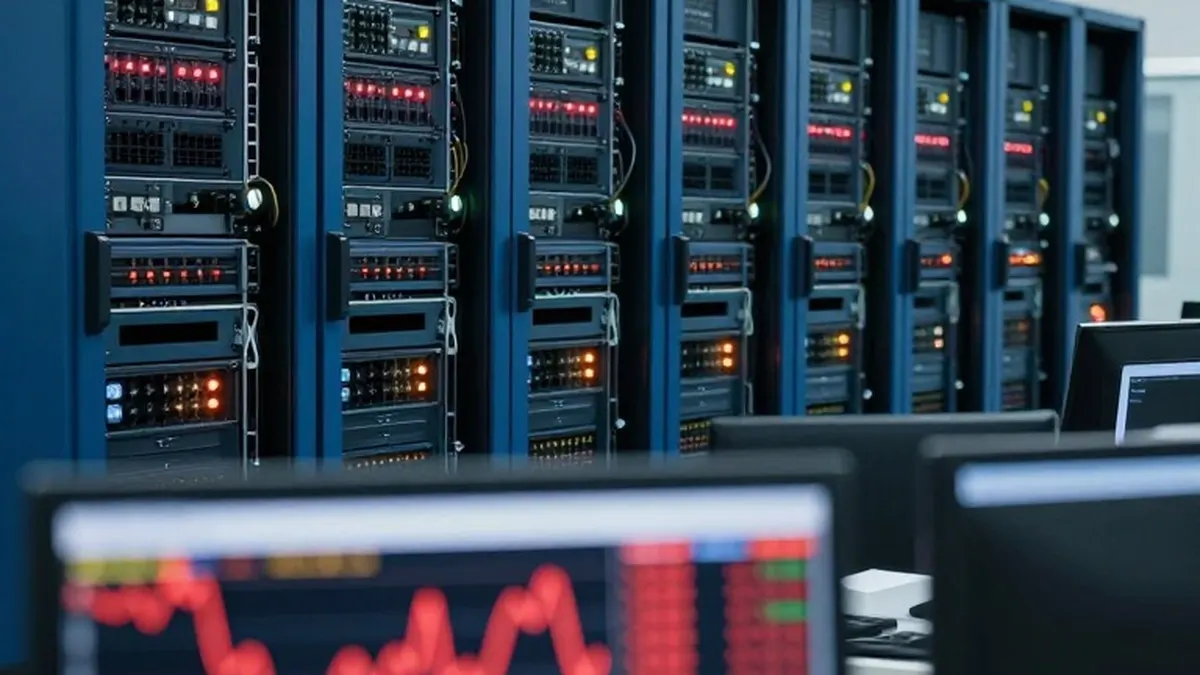
The sudden departure of Jensen Huang as chief executive of Nvidia has triggered a significant reassessment of the artificial intelligence sector. The resignation, which follows reports of personal misconduct and suspicions of espionage, has led to a sharp decline in the company's stock value. Nvidia, which typically represents six to seven percent of the S&P 500 index, is now navigating its most severe governance crisis since its founding in 1993. This turmoil has raised urgent questions about the resilience of the massive capital flows that currently support the global AI boom.
The crisis centers on allegations involving Megaspeed, a Singapore-based computing firm that purchased billions of dollars in Nvidia hardware. On November 8, Huang acknowledged a relationship with Alice Huang, a Megaspeed executive who joined the company in 2023. Intelligence officials suspect that Alice Huang was operating on behalf of China’s Ministry of State Security. US authorities are currently investigating whether Megaspeed facilitated the transfer of advanced processors to Chinese customers in violation of American export controls. Huang was recently summoned to testify before US lawmakers regarding these matters.
The situation has added a geopolitical dimension to the commercial relationship between the United States and China. Washington has long restricted China’s access to powerful AI chips to prevent them from enhancing military and surveillance capabilities. While export controls introduced in 2018 initially forced manufacturers like Nvidia to create less powerful versions of their chips for the Chinese market, analysts note that digital transfers can sometimes bypass these physical restrictions. The US Chip Security Act, which passed the House Foreign Affairs Committee in March 2026, aims to enforce location verification to close these gaps, though it still faces legislative hurdles.
Market observers suggest that Huang’s exit weakens Nvidia’s position in ongoing regulatory debates. The company has reportedly opposed both the Chip Security Act and the AI Overwatch Act. With Huang gone, Nvidia loses a key voice in lobbying efforts. This development occurs against a backdrop of political shifts in the US, where AI infrastructure and data center expansion played a significant role in recent midterm elections. President Donald Trump, who previously awarded Huang the National Medal of Science, has historically resisted stringent AI regulations.
Nvidia has appointed Colette Kress, its long-time Chief Financial Officer, as interim CEO. Kress now faces the challenge of demonstrating that the company’s success is rooted in institutional strength rather than reliance on a single individual. The firm remains a critical partner for major technology companies including Microsoft, Amazon, Google, and OpenAI. Its graphics processing units form the foundation of the broader economic ecosystem involving cloud providers and government entities. However, the market is currently testing whether the company can maintain its dominant position without its founder at the helm.
The decline in Nvidia shares has broader implications for the AI industry. The company’s stock has lost 13 percent of its value since Monday and is down more than 26 percent over the past month. This downturn is part of a wider trend affecting AI stocks, driven by political uncertainty, potential interest rate hikes, and US-China trade tensions. Investors are increasingly scrutinizing the sustainability of the enormous capital being invested in the sector, which relies on the assumption of continued demand growth for technological infrastructure.
The timing of this crisis is particularly significant for Anthropic, the company behind Claude AI. Anthropic is scheduled to price its initial public offering on the Nasdaq on November 18, aiming to raise approximately $64.4 billion. This move would value the company between $1.26 trillion and $1.41 trillion, a figure lower than the over $2 trillion valuation it had previously targeted. The success of this offering could serve as a critical signal to the market regarding the stability of the AI investment chain. If confidence continues to waver, the repercussions could spread to other developers seeking to attract capital for sophisticated model development.
The Nvidia affair has also intensified discussions in Europe regarding technological sovereignty. European governments have repeatedly called for greater independence from American tech giants and for the development of domestic AI champions. The crisis highlights the difficulty of achieving this goal given the resources and expertise required. Some European officials point to initiatives like the UK’s AI Security Institute as models for building accountability in technology deployment. The situation is prompting major players to reconsider succession planning and board independence to mitigate future risks.
While no confirmation has yet emerged that sensitive technical information was passed to Beijing or that Huang knowingly assisted an intelligence operation, the incident has exposed vulnerabilities in the industry’s structure. Analysts note that the market is realizing weaknesses related to personalization and a lack of decentralization of power. The episode serves as a reminder that the tech industry is more than just business metrics; it is deeply intertwined with geopolitical strategy and public trust.
As Nvidia prepares to release its third-quarter results on November 17, the market awaits further clarity on the company’s future direction. The interim leadership must navigate these challenges while maintaining the company’s status as a bellwether for the international AI economy. The outcome of the next few weeks will likely determine whether the industry can weather this governance shock or if it marks a turning point in investor sentiment toward artificial intelligence.