Layoffs at Stelco Put Canadian Steel Jobs at the Center of a Cross-Border Fight
Hundreds of steelworkers in Ontario are out of work after Stelco's American owner idled parts of its operations, and the union and Ottawa say US tariffs are not the whole story.
By Evelyn Adeyemi ·
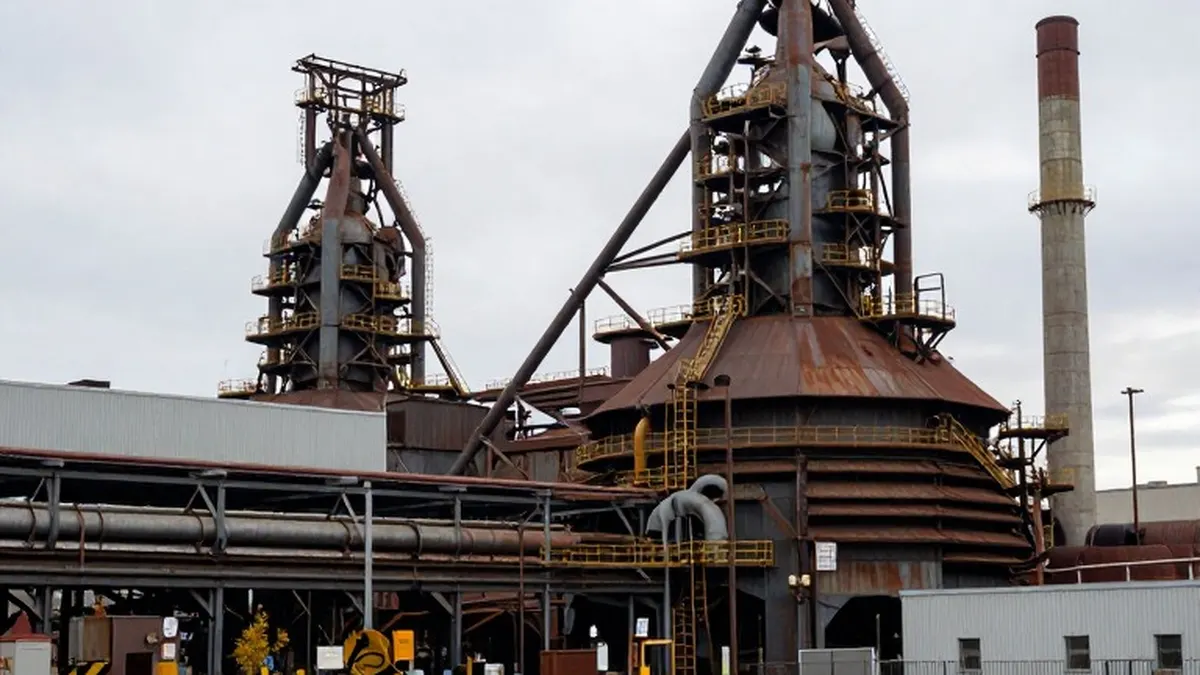
Chelsey Masteij was using up vacation days with her new dog when the call came telling her not to return to work at Stelco's plant in Hamilton, Ontario. The 34-year-old had spent years trying to break into the male-dominated steel industry before landing a job there about three years ago, starting as a general labourer in the cold-rolling department and later training to operate cranes and work the coke ovens. She thought she might stay until retirement. Instead, she was laid off on October 9.
"I was in a complete mess," she told Al Jazeera, her voice cracking. "I was kind of depressed." Now, rather than working 12-hour shifts, she spends much of her time at home, cutting expenses while collecting employment insurance.
Masteij is one of hundreds of Canadian steelworkers affected after Stelco's American owner, Cleveland-Cliffs, announced in late September that it would temporarily shut down parts of its operations in Hamilton and Nanticoke, Ontario. As of Saturday, 175 workers at the Hamilton plant had received layoff notices, with the cuts expected to reach up to 500 workers across both sites. Stelco blames US President Donald Trump's tariffs, which it says have made it harder to sell Canadian steel to American customers, along with competition from cheaper foreign steel entering Canada.
In June 2025, Trump doubled tariffs on steel and aluminium imports, including from Canada, to 50 percent. According to Stelco, Canadian exports of cold-rolled and coated steel to the US fell 58 percent in the second quarter of 2026 compared with the pre-trade-war quarterly average. Colin Mang, an assistant professor of economics at McMaster University in Hamilton, said demand has also slumped at home, where the tariff-hit auto industry is a major buyer of the Hamilton plant's cold-rolled steel. "When they say that there is less demand for the product coming out of the Hamilton mill, that is correct," he said.
But the union and the Canadian government question whether the layoffs were necessary at all. "Everyone knows we're being used as pawns, that these layoffs weren't necessary," said Ron Wells, president of United Steelworkers Local 1005. The union notes that CEO Lourenco Goncalves warned during a July earnings call that the company might scale back Canadian production unless Ottawa did more to shield the industry from imports. The union offered to help lobby Ottawa for stronger protections, Wells said, but "they never took us up on our offer."
Ottawa has accused Cleveland-Cliffs of breaking commitments made when it bought Stelco in 2024, including maintaining unionised job levels and advocating for trade policies benefiting both countries. The company denies violating the agreement, saying it expects to meet its employment commitments for the year and that the layoffs are needed to "ensure the survival of Stelco." The government and union counter by pointing to the company's strongest quarter since the acquisition, reported earlier this month. "Mr Goncalves is not a victim," Industry Minister Melanie Joly told CBC. "He's never made so much money."
Critics also highlight what they call a contradiction: Goncalves has been a vocal supporter of Trump's tariffs on Canadian steel, telling US lawmakers in January that no country, including Canada, should be exempt, and telling Politico last year he was "very happy" with the 50 percent tariffs. Mang also disputed Goncalves's claim of "an avalanche of imports," noting that nearly 80 percent of Canada's cold-rolled steel imports come from the US. "This stuff is coming from his own country," Mang said.
Pressure escalated when Goncalves told CBC late last month: "I bought Stelco because I could not afford anymore having Stelco flooding the market here in the United States to the detriment of my own company." Joly said the comments could strengthen the government's case, and on November 6, as Ottawa's 15-day deadline for the company to honour its commitments expired, she asked the Competition Bureau to investigate the 2024 acquisition. Cleveland-Cliffs maintains it has complied with the Investment Canada Act. Goncalves has rejected a forced sale but suggested he might sell Stelco himself in a year, and said he hopes to bring laid-off workers back before Christmas, depending on Canadian customers buying Stelco steel.
Masteij, whose low seniority means she would be among the last recalled, plans to take a heavy equipment training programme while on employment insurance, though she still hopes to return to Stelco. She also worries about her city, where steelmaking has shaped identity for more than a century. "I'm a steel city girl, and I can't imagine the city without steel manufacturing," she said. Wells, meanwhile, fears a drawn-out legal fight. "Our members don't have a lot of time," he said. "We're hoping things get settled as soon as possible."