Hasina's proposed December return raises tensions in Bangladesh and India
The ousted prime minister's announcement has revived debate over her banned party and complicated relations between Dhaka and Delhi, although her journey remains unconfirmed.
By Evelyn Adeyemi ·
Bangladesh's ousted prime minister, Sheikh Hasina, plans to return from India on 16 December, according to her spokesperson, raising the prospect of confrontation with authorities who say they will arrest her immediately. The proposed date coincides with Victory Day, which commemorates Bangladesh's victory over Pakistan in the 1971 liberation war. No journey has yet been confirmed.
Hasina, 79, fled to Delhi in August 2024 when a student-led uprising brought her 15 years in power to an end. She was subsequently convicted of crimes against humanity over her role in the crackdown and sentenced to death in her absence. The trial raised due process concerns. The UN says security forces killed as many as 1,400 people during the uprising. Her Awami League party is now banned, and the government has pledged to enforce her sentence.
Her aide Abu Obaidha Arin told the BBC that Hasina wants Bangladesh's government to organise a flight from Delhi. Alternatives include commercial air travel or a land crossing, with supporters identifying nine possible border entry points. Bangladesh insists she must be extradited. India's foreign ministry said on Wednesday that the extradition request was under examination through established procedures, while treating any voluntary return as a separate issue.
Arin said Hasina has maintained her political network through more than 300 interactive Telegram audio meetings over the past 18 months, reaching supporters throughout Bangladesh's 64 districts and 300 constituencies. He claimed the party could assemble five million people in a human chain along her route to Dhaka. That mobilisation claim comes as much of the party's leadership remains overseas, imprisoned or in hiding, and supporters face arrests and thousands of cases.
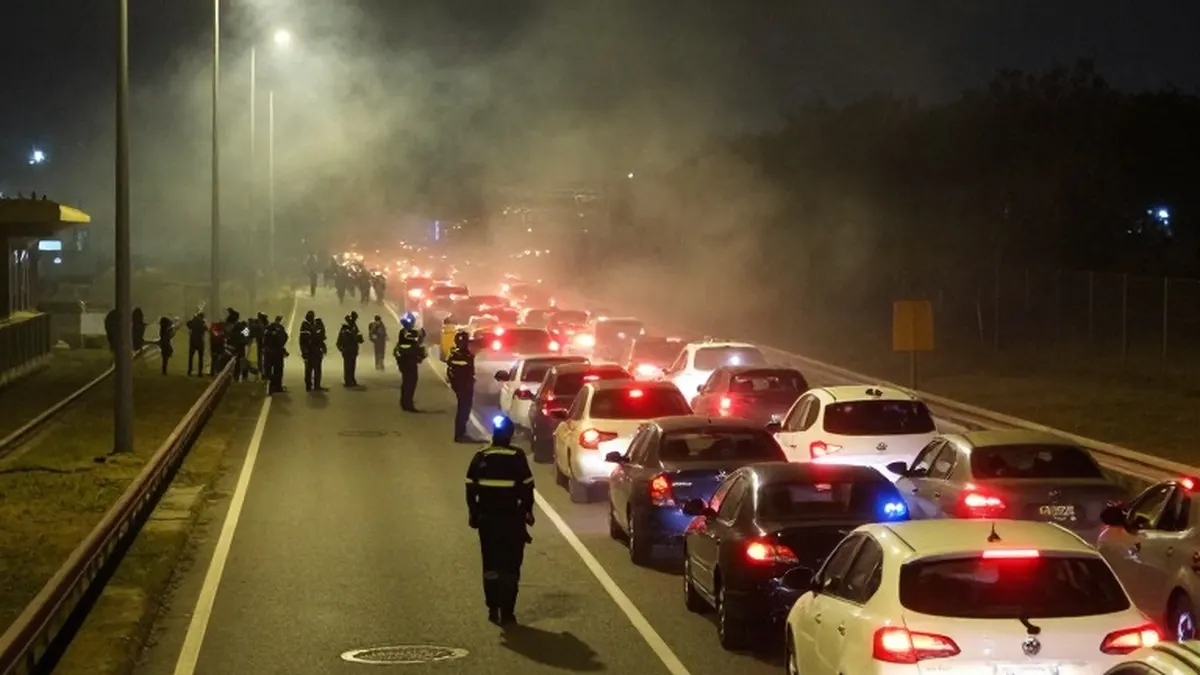
Awami League supporters have nevertheless continued holding flash protests, with demonstrations becoming more frequent and confrontational in recent months. Reports from Hasina's ancestral district of Gopalganj describe attacks on police stations, burned vehicles and property belonging to ruling Bangladesh Nationalist Party leaders being targeted. Bomb attacks, arson and vandalism have also been reported in several districts, although responsibility for some incidents is disputed.
Conflict monitoring organisation Acled recorded 40 demonstrations and more than 140 riots involving supporters up to 23 November. It said political violence had killed at least 11 people this month, including two civilians, with six deaths directly connected to the unrest. The government describes recent sporadic violence as terrorism, while supporters say their demonstrations are peaceful and accuse authorities of repression.
Shafiqul Alam, editor of Daily Waadaa and a former press secretary to the interim government led by Muhammad Yunus, told the BBC that the Awami League was taking advantage of divisions among the forces that removed Hasina. He pointed to disagreements over the July Charter, constitutional proposals and a referendum between the elected BNP government and its rivals, Jamaat-e-Islami and the National Citizen Party.
The announcement also puts pressure on India's strained relationship with Bangladesh. Delhi has pursued talks on trade, border security and other issues while sheltering Hasina, whose public statements have angered Dhaka. SOAS University of London academic Avinash Paliwal argued that her announcement shifts the immediate choice towards Bangladesh. Alam questioned whether India had done enough to rebuild trust, citing unresolved extradition and other bilateral issues.
Doubts persist over whether Hasina will follow through. Acled South Asia analyst Pearl Pandya said the death sentence makes her return unlikely, although her remarks have energised supporters. A Dhaka-based foreign-policy expert who requested anonymity warned of protests and confrontation approaching 16 December, while acknowledging that the proposed homecoming could again be postponed.