UN Talks on Autonomous Weapons Face Resistance to Binding Rules
Most states in a UN weapons convention support negotiating binding limits, but opposition from major military powers could complicate agreement.
By Lorenzo Evans ·
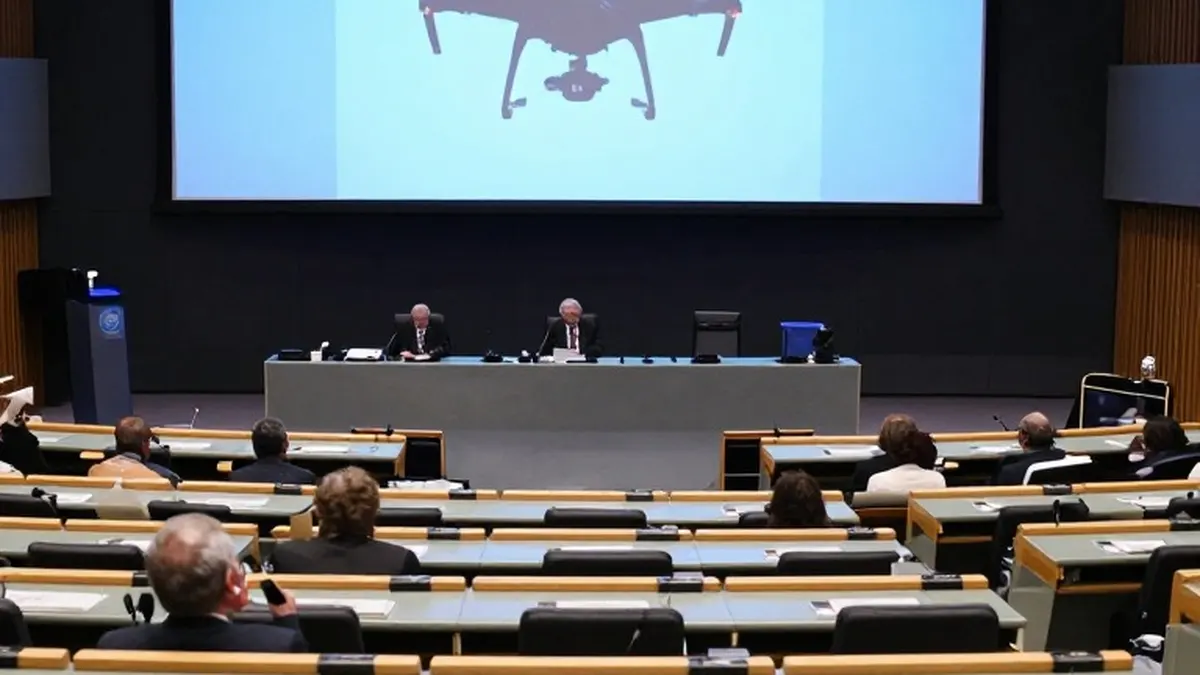
A UN-hosted meeting opening on November 16 is set to consider whether to begin negotiations on a legally binding agreement to prohibit or regulate lethal autonomous weapons systems. Most of the 128 countries belonging to the Convention on Certain Conventional Weapons support that approach, while major military powers including the United States, Russia and Israel have opposed it.
Advances in artificial intelligence have accelerated the development of drones, robots, tanks, submarines and other military equipment capable of killing without human involvement. Semi-autonomous weapons assisted by AI have already been deployed in Ukraine, Sudan and the Middle East, despite ethical concerns. Campaigners warn that unpredictable behavior by autonomous systems could lead to fatal mistakes.
The leaders of the United Nations and the International Committee of the Red Cross, as well as the Pope, have called attention to the dangers and backed regulation. Human Rights Watch is pressing the Review Conference for firm action. Its representative Verity Coyle said, “Machines should never be allowed to decide who lives and dies on a battlefield,” warning that such a prospect was approaching.
Anna Hehir, who heads military AI governance at the Future of Life Institute, said lethal autonomous weapons could no longer be considered science fiction. She cited media reports describing early use of fully autonomous systems in Ukraine. The US-based nonprofit focuses on reducing risks associated with advanced technologies, including artificial intelligence.
Washington favors guidelines rather than binding restrictions, maintaining that existing international law provides a framework for warfare. It has proposed a five-year mandate for discussions aimed at a non-binding agreement. The Red Cross disputes the adequacy of existing humanitarian law, saying it fails to sufficiently address the particular risks posed by autonomous weapons.
Russia has previously resisted a binding agreement but has not publicly outlined its position ahead of this week's meeting. A senior Western diplomat told Reuters that Moscow intended to prevent the European Union, which participates as an observer, from speaking at the talks. Hehir told Reuters she expected both Russia and the United States to try to weaken the outcome, as they had with a September text concerning autonomous weapons and their potential harm.
Two diplomats told Reuters they expected difficult discussions, although a compromise remained possible by the end of the week. One said options included binding rules, voluntary arrangements or a combination. The chair has proposed two years of negotiations on a legally binding protocol. According to Coyle, Britain, Germany and France favor negotiations on an instrument whose eventual legal status would remain open.