Inflation and conflict drive Yemeni families in Hodeidah to the edge of survival
Renewed fighting and soaring prices are forcing residents in Yemen's Red Sea port city to skip meals and reduce essential purchases as economic contraction deepens.
By Lorenzo Evans ·
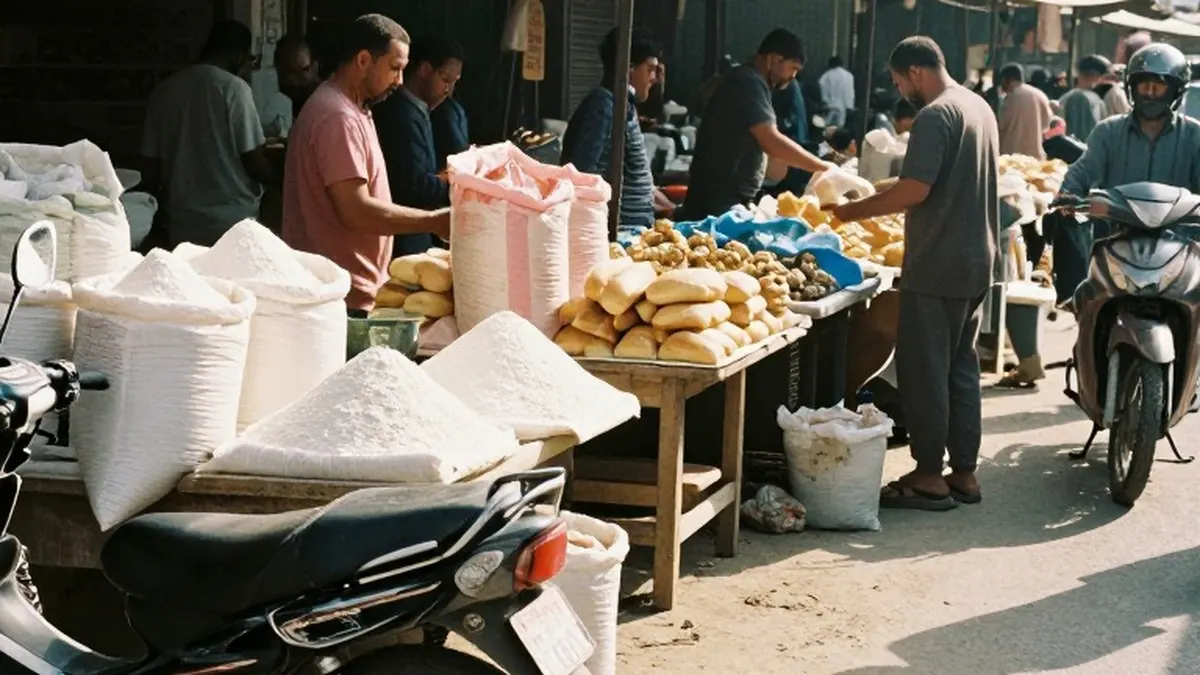
Ahmed Arjash, a motorbike taxi driver in his late 30s, begins his day near the Othman market in central Hodeidah with a singular goal: earning enough to feed his family of six. In addition to transporting passengers, he delivers small goods for local merchants. By the end of each day, he must have secured sufficient funds to purchase flour, rice, and bread, as well as the daily rental fee for his motorcycle. Often, his earnings fall short of these basic requirements.
Arjash noted that previously, his daily income allowed him to buy enough food for the day and sometimes save a small amount for vehicle repairs or medicine. Now, he stated that his earnings barely cover fuel and rental costs. On many days, he returns home with little or no food, leaving his family hungry.
The struggle for basic goods is widespread in Hodeidah, the Red Sea port that handles the majority of commercial and humanitarian imports into Yemen's Houthi-controlled northwest. The economic strain is compounded by renewed fighting between the Houthis and Saudi-backed government forces. This conflict intensified in July after four years of relative calm, with the Houthis making significant advances along the southern Red Sea coast. Although the Saudi-led coalition has attacked the port, it remains open.
In the al-Salkhana neighborhood, Umm Sami, a widow raising four children, sells household items and performs domestic work. She explained that rising prices have forced her to buy food in very small quantities, such as a little flour or oil that lasts only a day. She described bread as a burden, noting that her children ask for foods they used to eat before the war, forcing her to stay silent or distract them.
According to the Yemen Joint Monitoring Report, the cost of a basic food basket in Houthi-controlled areas rose by about 7 percent in September compared to August, marking the highest increase in a year. While food remained available in accessible markets, families had less money to spend. The World Food Programme reports that Yemen imports approximately 90 percent of its food, making the population vulnerable to global price shifts.
In the city's poorest areas, many families are skipping meals or going without meat, fish, milk, and fruit. Those without clean water at home must buy it at high prices, and deteriorating health facilities leave many unable to afford treatment. Public sector employees who have stopped receiving salaries and families with fixed incomes are also facing severe hardship. The World Bank reported in May that Yemen's economy contracted by 1.5 percent in 2025 and projected a further 0.5 percent contraction for 2026.
Fishing, a traditional mainstay of Hodeidah's economy, has become less profitable. Salem, a fisherman in his 30s, said that the costs of equipment and fuel have risen significantly while purchasing power in the city fluctuates. He noted that many families no longer buy fish as frequently as before, and some fishermen return with barely enough to cover the cost of their trip.
Construction worker Saleh, who is paid by the day, said that days often pass without work. He explained that even when he works, the wage is not enough to cover his family's needs for several days due to high prices. He observed that food, transport, and household needs have all increased in cost while income remains stagnant or shrinks. Economic analysts point out that high transport, shipping, and fuel costs are passed directly to consumers, and risks to regional shipping have raised insurance and freight costs on imports.
Fighting in Hodeidah governorate's Hays and al-Khokha districts earlier this year has displaced more families. On October 2, the World Food Programme stated that the conflict had cut off access to about 350,000 people in parts of Taiz and Hodeidah governorates. The agency reallocated resources from November distributions to sustain its emergency response and warned of assistance gaps without new funding. Its monitoring found that 74 percent of reachable households were unable to meet basic food needs. The WFP suspended activities in Houthi-controlled areas in September 2025 after the detention of UN staff members.
For Arjash, the war is visible in the dwindling number of passengers who can afford his services. He noted that people walk long distances to save money and haggle over every rial. He expressed feeling helpless when his children ask for simple items he cannot provide.