EU Council President Unveils Revised Budget Draft Featuring Digital Tax
Antonio Costa proposes a smaller multiannual budget that includes a 3% levy on major tech firms to reduce member state contributions, though France has already voiced strong objections.
By Lorenzo Evans ·
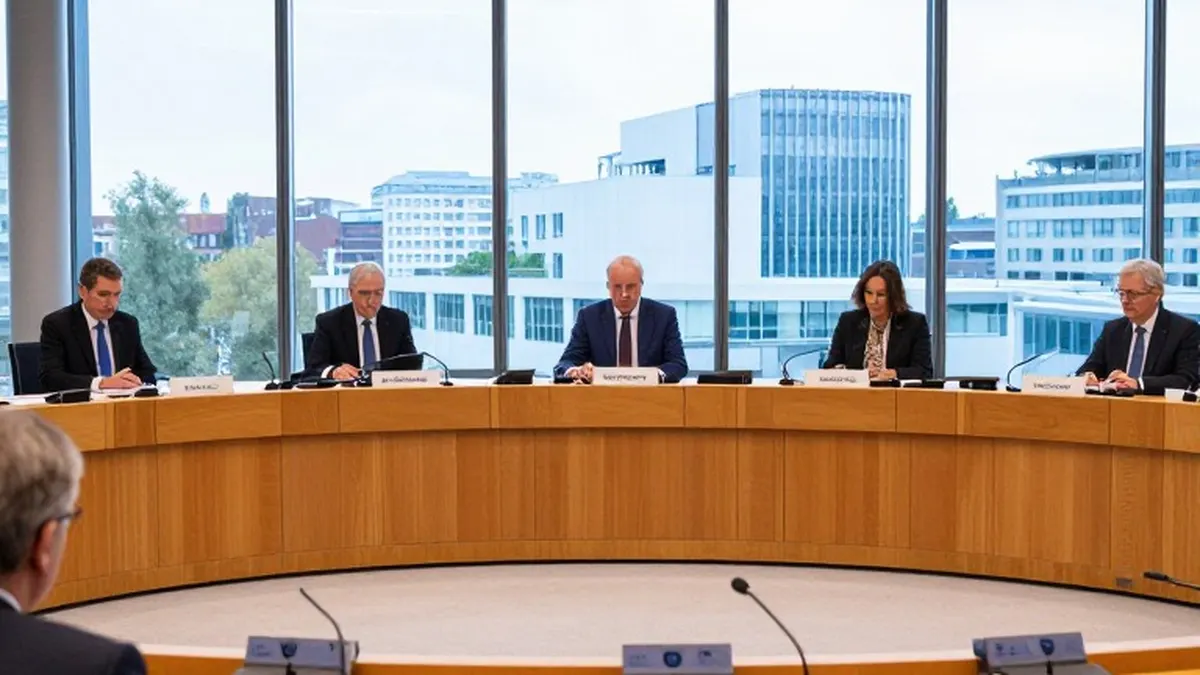
European Council President Antonio Costa has introduced a new draft for the European Union's upcoming multiannual budget. The proposal is designed to address previous disagreements among member states by reducing the overall financial scale and introducing new revenue streams. A central feature of this plan is a specific tax on large technology companies, intended to lower the direct financial burden on national governments.
The EU budget serves as the shared financial framework for the bloc, funding a wide array of initiatives. These include agricultural subsidies, infrastructure development, border security, and defense programs. The process for the 2028 to 2034 period began with a draft from the European Commission in 2025. However, that initial proposal faced significant pushback, particularly from northern European nations such as Germany, which argued that the budget was too large and demanded a more restrained approach.
In response to the criticism, Costa has presented a revised draft that is smaller by 204 billion euros. This reduction aims to make the budget more palatable to member states that are wary of excessive spending. Despite the adjustment, divisions among the 27 member states appear to persist. France reacted quickly to the new proposal, describing it as "deeply disappointing" in its initial assessment.
The core of Costa's strategy involves creating a "balanced basket of new own resources." These new revenue channels are explicitly intended to keep national contributions at a reasonable level. By generating independent income for the EU, the proposal seeks to ensure that member states do not have to contribute as much from their own national treasuries as they would under the previous framework.
The most significant new revenue source is a tax targeting the digital sector. The levy applies to companies that generate an annual turnover of at least 50 million euros from digital activities within the EU and at least 750 million euros worldwide. According to Costa, these firms will pay an annual contribution equal to 3% of their net annual turnover derived from online advertising, digital intermediation services, and user-generated data.
Beyond the technology sector, the proposal includes other specific taxes to diversify the EU's income. These additional revenue streams include levies on tobacco products and electronic waste. The goal is to create a more sustainable and self-funded budget structure that reduces reliance on member state payments.
The path to final approval remains complex. Neither the European Commission nor President Costa holds the final authority on the budget. The proposal will now be the centerpiece of extensive negotiations when EU leaders convene in Brussels next week. These discussions are expected to be lengthy and intense as leaders attempt to find common ground.
Costa expressed optimism about the prospects for an agreement. In a statement regarding the proposal, he wrote, "This is a realistic budget that addresses our new priorities while preserving our established policies." He added that he is confident the draft provides a solid foundation for moving toward a final consensus.
However, the French presidency has indicated that a final agreement may still be distant. French officials stated that the budget "falls well short of what is needed," particularly regarding the Common Agricultural Policy. They emphasized the need to guarantee adequate income support for farmers, a key concern for the French government.
The French presidency further noted that, as it stands, the proposal does not yet provide a sufficient basis for an agreement. The EU had previously aimed to reach a general political agreement on the budget by the end of 2026, with formal adoption planned for 2027. The current divergence in views suggests that these timelines may face pressure as negotiations proceed.