
Israel Prepares Expanded Coalition for Potential Iran Strikes
Israeli and US military leaders are coordinating for a possible renewed conflict with Iran, seeking a broader regional alliance to ensure rapid and effective operations.
By Evelyn Adeyemi ·
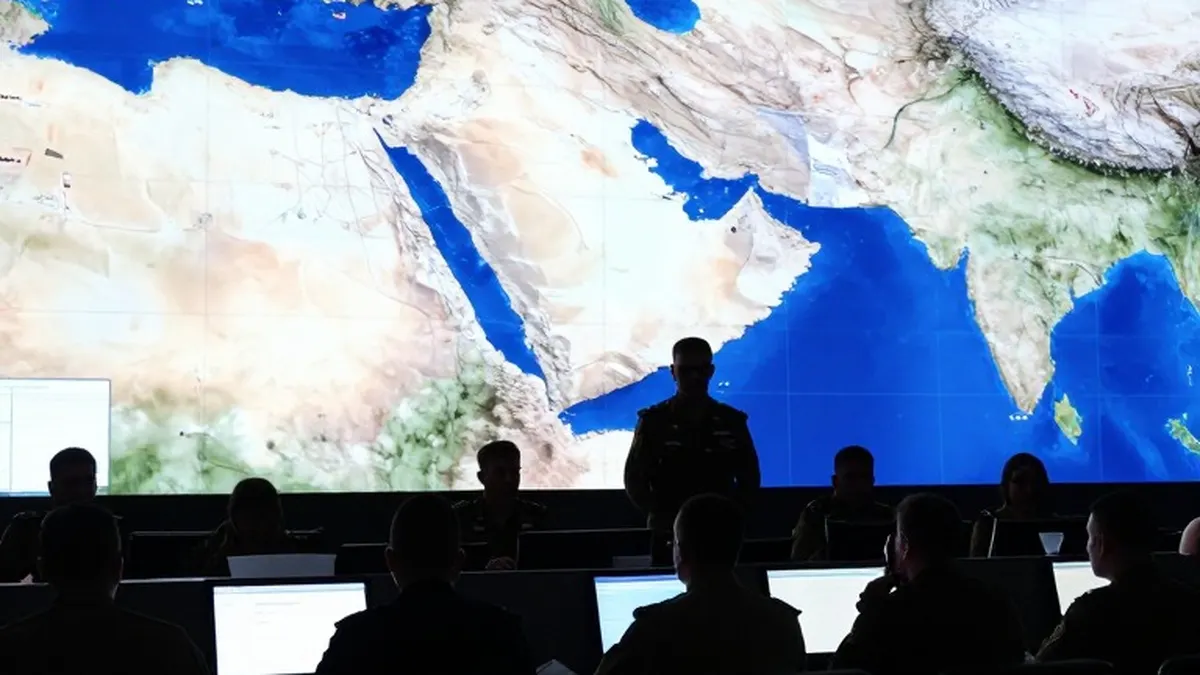
Israeli defense officials are preparing for the possibility of a new military confrontation with Iran. Security sources indicate that any future action would likely involve a significantly larger and more coordinated regional coalition than the one formed during Operation Roaring Lion earlier this year. The primary goal of this expanded alliance is to shorten the duration of the campaign and focus strikes on Iran's key strategic and military assets. This preparation comes amid reports that Tehran is planning to target US interests in the Middle East as well as Israel's home front.
A notable sign of closer security coordination occurred during a visit to Israel by US Central Command commander Adm. Brad Cooper and his delegation. The visit was hosted by IDF Chief of Staff Lt. Gen. Eyal Zamir. During this time, the IDF Spokesperson's Unit released unusual photographs showing Mossad Director Roman Gofman alongside the military chiefs. Security officials stated that this rare public display was intended to demonstrate a united front among Israel's senior defense and intelligence leadership regarding their assessments of Iran's capabilities and intentions.
Sources within the defense establishment believe the current moment presents a critical opportunity to strike Iran before the country completes the rebuilding of its offensive and defensive military capabilities. However, they emphasize that such an operation must be conducted in close cooperation with the US military and a broader regional coalition. The key to success, according to these officials, lies in the high level of continuous professional discussions and intelligence exchanges between the IDF and US forces.
Military coordination between the two nations is ongoing around the clock. Discussions with CENTCOM have moved beyond simple intelligence sharing to include detailed assessments of various scenarios and coordinated responses to different forms of Iranian retaliation. This ensures that if the US president authorizes an attack, the transition from heightened readiness to operational execution can happen rapidly. The aim is to maintain operational readiness at all levels, regardless of immediate political decisions.
Israeli security officials are particularly concerned about the potential for Iran to inflict greater damage on the home front during a future conflict. During the previous engagement, Iran launched approximately 200 precision ballistic missiles at Israeli civilian areas in a single night. Officials fear Tehran may attempt to escalate such attacks using different operational methods. Consequently, the defense establishment believes any renewed campaign would need to begin with a surprise attack involving highly intensive military operations.
There is also consideration for the possibility that Iran might anticipate an impending strike and launch an attack first. Such a scenario would force Israel and the United States to make a critical decision about whether to carry out a preemptive military strike. The timing of these actions is seen as vital to catching the Iranian regime before it restores its full military strength.
Beyond operational planning, leaders in Jerusalem, Washington, and other regional capitals are discussing the wider consequences of another military campaign. Central concerns include the long-term stability of the Middle East, the potential impact on global energy markets and international trade, and the willingness of Arab countries to be publicly associated with military cooperation involving Israel and the US. These diplomatic and economic factors add complexity to the military preparations.
A significant challenge remains the gap between military preparedness and political decision-making. While senior commanders can maintain operational readiness and strengthen coordination, the final decision to launch an attack depends on political leaders and their domestic considerations. For Israeli defense officials, the central question is whether Washington and regional partners will agree to participate in the operation.
Ultimately, the outcome of the potential conflict will depend on political decisions made in Washington, Jerusalem, and other regional capitals. Even as military coordination and preparations continue, the success of any joint operation hinges on the alignment of political will among the key stakeholders involved in the confrontation with Iran.