IDF reports significant increase in winter aid entering Gaza amid ongoing disputes
Military officials state that tens of thousands of tents and thousands of supply trucks have entered the Strip recently, while accusing Hamas of using the aid for strategic advantage.
By Lorenzo Evans ·
The Israel Defense Forces reconfirmed on Friday that substantial quantities of winter provisions are currently entering the Gaza Strip. In a public statement, the military accused Hamas of serving as the primary barrier to the region's recovery. Officials claimed that the militant group is actively exploiting humanitarian infrastructure and the incoming aid supplies for its own benefit.
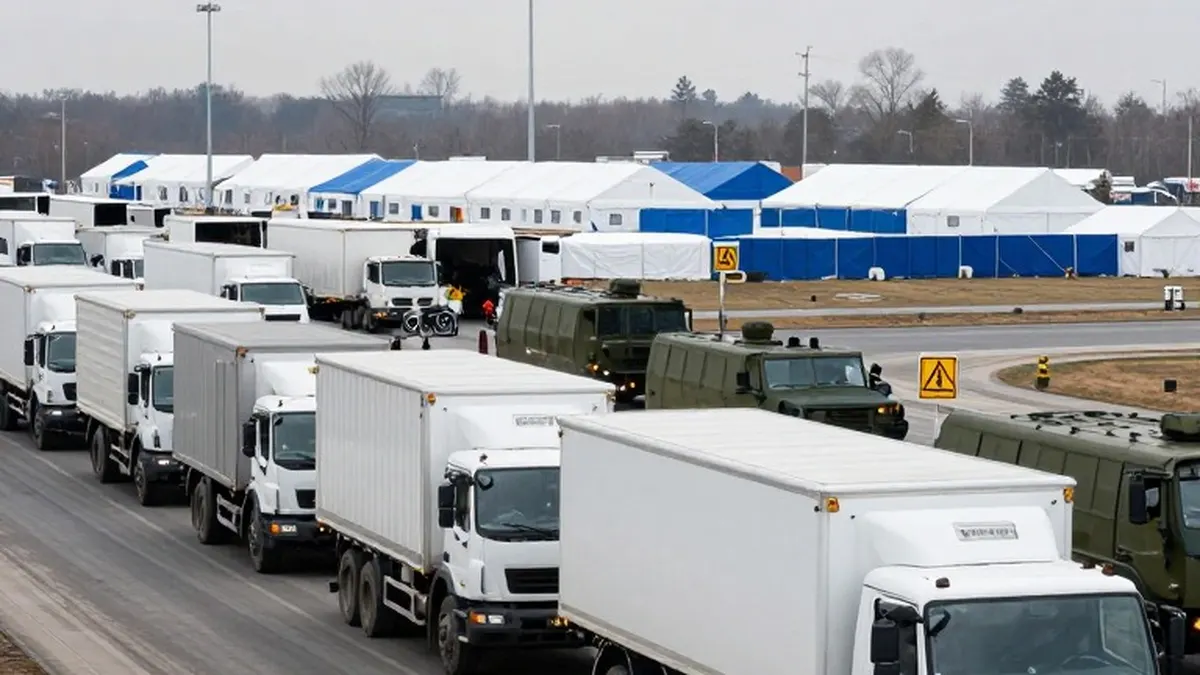
According to data provided by the IDF, thousands of additional tents have been permitted into the territory over the past week. This recent influx has raised the total number of tents distributed since the start of the winter season from over 91,000 on Monday to more than 93,000. The military emphasized that these numbers reflect a steady flow of essential shelter materials.
The volume of truck traffic carrying general winter supplies has also seen a notable rise. The IDF reported that hundreds of trucks crossed into Gaza during the last seven days. This increase pushed the cumulative total from 8,200 trucks on Monday to over 8,600 for the period.
Beyond general supplies, the military noted that vehicles transporting medical equipment and medications were also allowed to enter. These items were delivered directly to hospitals and clinics across the Strip. Specific examples of the medical goods mentioned by the IDF include dialysis fluids, defibrillators, incubators, ultrasound machines, and physiotherapy equipment.
The IDF and the Coordinator of Government Activities in the Territories stated that they are collaborating with international partners to meet the specific needs of the winter season. The military maintained that its efforts are focused on ensuring that essential resources reach the population despite the challenging conditions.
In its formal statement, the military reiterated its position on the political landscape of the conflict. It described Hamas as the main obstacle to both the rehabilitation of the Gaza Strip and the establishment of a different future for its residents. The IDF argued that as long as Hamas remains armed, full rehabilitation of the area will not be achievable.
The military further asserted that Hamas continues to leverage humanitarian infrastructure. The statement highlighted that this exploitation is particularly evident in the management of winter supplies being brought into the territory. This view underscores the ongoing tension between military operations and humanitarian logistics.
Earlier in the week, the Trump administration’s Board of Peace issued a call for Israel to facilitate the entry of winterization and humanitarian supplies more rapidly. The body criticized the pace of approvals for essential materials, noting that progress had been insufficient following recent severe flooding events.
The Board of Peace described the current situation as an immediate humanitarian emergency rather than a simple threat posed by the approaching cold weather. The organization emphasized the urgent need for improved shelter, sanitation facilities, and drainage systems to protect displaced Palestinians from the advancing winter conditions.
The recent data from the IDF provides a quantitative backdrop to these diplomatic and military statements. While the military highlights the increase in tents and trucks, international bodies continue to press for faster access to ensure that the aid effectively mitigates the impact of the winter season on the population.