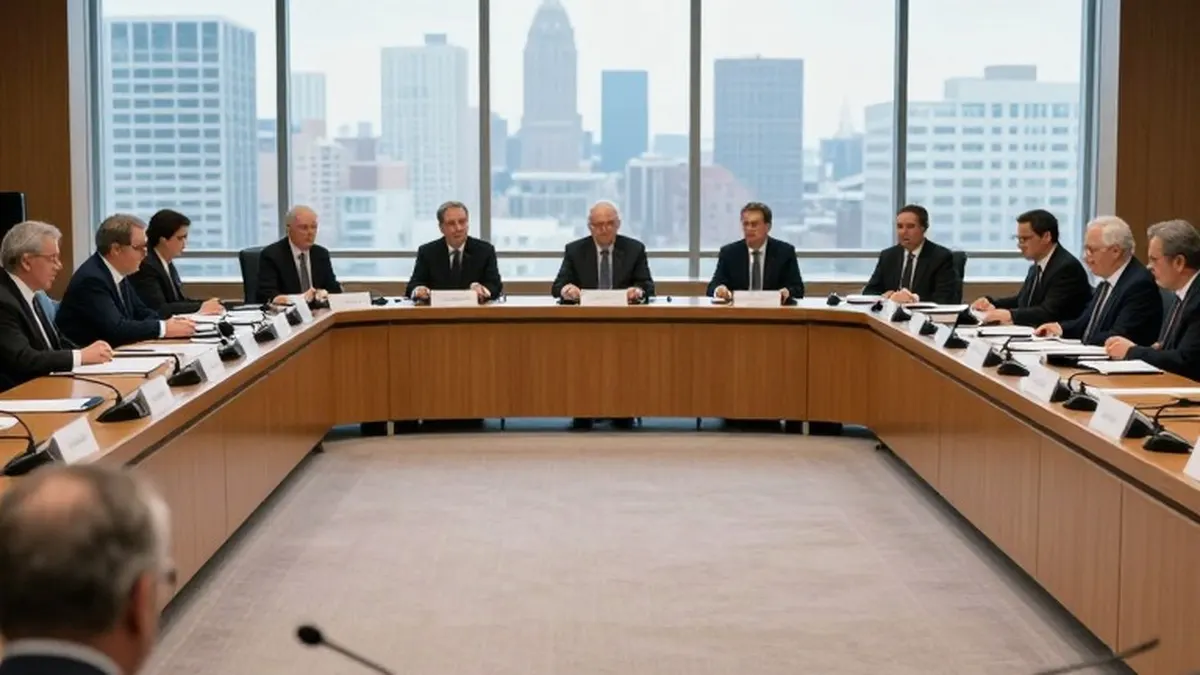
Haredi leaders and Gadi Eisenkot discuss draft law removing enlistment quotas
Negotiations between Yashar and haredi factions center on a new framework that would exempt yeshiva students from military service limits, though both sides deny a final agreement has been reached.
By Evelyn Adeyemi ·

Discussions between Yashar party leader Gadi Eisenkot and representatives of haredi factions have focused on a proposed framework to resolve the ultra-Orthodox draft crisis. According to reports from N12 and Kikar HaShabbat published on Tuesday, the plan includes eliminating enlistment quotas. It would allow all full-time yeshiva students to continue their studies without facing sanctions if they do not meet specific military service targets.
The proposed framework also contains a call from leading rabbis for haredi men who are not currently studying Torah to enlist in the Israel Defense Forces. Additional measures aim to strengthen oversight of religious seminaries. These include the implementation of biometric identification systems at yeshivas to prevent fictitious enrollment. The plan further suggests an expansion of dedicated military service tracks for haredi soldiers.
Attorney Raz Nizri is playing a central role in these negotiations as the representative for Eisenkot. Nizri previously supported a similar framework, positioning him as a key figure in the current diplomatic efforts. However, the proposal faces a significant legal challenge. It remains unclear whether the High Court of Justice would uphold a broad exemption for yeshiva students without quotas, given its previous rulings that required the state to enforce mandatory conscription more strictly.
Eisenkot has been leading his bloc's negotiations with United Torah Judaism, the haredi faction. This process follows a decision by Yisrael Beytenu leader Avigdor Liberman to lift his longstanding veto on cooperation with haredi parties regarding the conscription issue. Despite this shift, talks reportedly stalled in recent days. Eisenkot has approximately two weeks remaining under the mandate granted by President Isaac Herzog to form a government earlier this month.
These negotiations are occurring alongside parallel talks between Eisenkot's bloc and Prime Minister Benjamin Netanyahu's Likud party. The parallel discussions explore the possibility of a unity government. Previously, Rabbi Dov Lando, the spiritual leader of United Torah Judaism, rejected an earlier framework proposed by Eisenkot because it included enlistment quotas. The current proposal appears to address this specific concern by removing those limits.
In response to the reports, the Yashar party stated that negotiations are taking place through several channels. The party noted that some circulating information was inaccurate or incomplete. A statement from Yashar emphasized the high sensitivity of the matter and the care being taken to form a government. Consequently, the party decided to refrain from commenting on various reports and speculation.
United Torah Judaism also denied that an agreed framework had been reached. The party stated that reports of progress in negotiations did not reflect the actual reality of the talks. Any final decision on the draft law would require the approval of the party's rabbinical leadership, a step that has not yet been completed.
Finance Minister Bezalel Smotrich criticized the reported proposal on X/Twitter. The Religious Zionist Party head accused the bloc seeking to replace Netanyahu of changing its position on haredi enlistment for political reasons. Smotrich described the shift as occurring in the blink of an eye, driven by a lust for power and control.
Smotrich argued that an alliance between the haredim and the Left would be a foolish move that would ultimately backfire. He also expressed strong opposition to relying on Ra'am, describing them as supporters of anti-Zionist terror. He called such a reliance an unforgivable crime for anyone involved in the government formation process.