Mecca Pact Faces Operational Tests as Gulf Security Concerns Grow
Pakistan, Saudi Arabia, and Turkiye are holding high-level talks in Islamabad to coordinate their collective defense strategy amid ongoing Houthi attacks and regional instability.
By Khalid Khalil ·
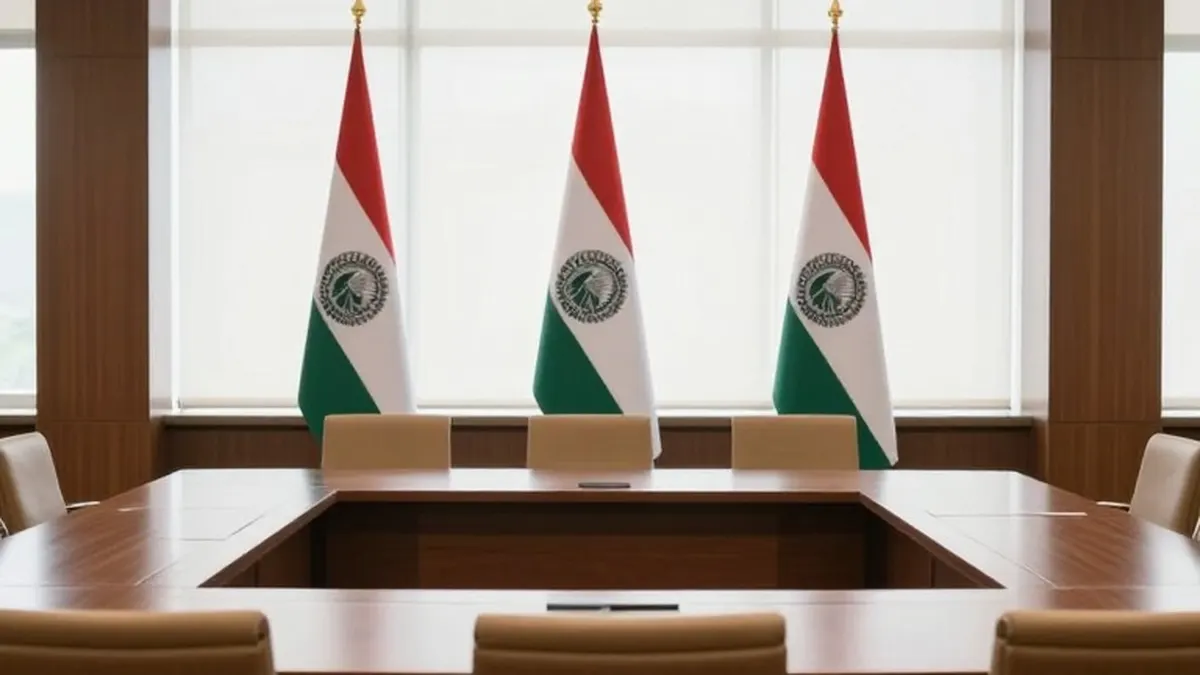
Senior officials from Pakistan, Saudi Arabia, and Turkiye convened in Islamabad on Friday for the third time since the three nations signed the Mecca Joint Defence Agreement in August. The meeting comes at a critical juncture as Houthi forces continue to launch attacks on Saudi Arabia while sporadic Iranian strikes target other Gulf states. Under the terms of the pact, an armed attack on any one member is considered an attack on all three signatories.
The agreement was established in August 2026, following a broader conflict that began with United States and Israeli strikes on Iran in February. Pakistan’s Defence Minister Khawaja Asif confirmed that the defence and foreign ministers of all three countries are attending the current session. He noted that the ongoing turmoil in Yemen, where the Houthis are based, is a primary focus of the discussions. Asif emphasized that the pact clearly states any threat to Saudi Arabia constitutes a threat to both Pakistan and Turkiye.
Despite the firm commitments, Pakistan has defined specific boundaries for its involvement. The country pledged to defend Saudi territory but explicitly ruled out launching offensive attacks against the Houthis within Yemen. This stance was clarified by Foreign Ministry spokesperson Sajjad Haider Khan in October, who stated that the alliance is intended to defend the three nations against aggression rather than project power into new theaters.
A significant portion of Pakistan’s military presence in Saudi Arabia actually predates the Mecca Pact. In April, a Pakistani force including fighter and support aircraft arrived at King Abdulaziz airbase under a separate bilateral mutual defence agreement signed in 2025. Analysts note that this earlier arrangement, inked when Gulf nations were reassessing their reliance on US security guarantees, forms the backbone of current defense coordination. However, some experts argue that the current limits on Pakistani operations fall short of Saudi Arabia’s desires for more active support.
The tension lies in Pakistan’s dual role as a military ally and a diplomatic mediator. Umer Karim, an associate fellow at the King Faisal Center for Research and Islamic Studies, explained that deeper military involvement against the Houthis could weaken Pakistan’s standing with Iran, the principal external backer of the Houthi group. Saudi Arabia wishes to retain Pakistan as a conduit for diplomatic engagement with Tehran while also seeking stronger defensive contributions against the Houthis.
Recent events have intensified the pressure on the alliance. In late November, a Houthi attack on a tower in Riyadh’s financial centre injured 11 people. Saudi authorities reported that at least 26 people have been killed in suspected Houthi drone and missile attacks since late September, with the majority of those deaths occurring at airports. In response, the member states agreed in October to ensure the rapid deployment of forces and capabilities to the kingdom, though the joint statement did not specifically name Yemen or the Houthis.
Turkiye’s Foreign Minister Hakan Fidan stated in November that the current policy focuses on the defense of Saudi Arabia, with no decision yet made on deploying troops inside Yemen. Similarly, Omer Ozkizilcik, an analyst at the Atlantic Council, expects the alliance to remain defensive for the moment. He noted that since Saudi Arabia has primarily requested defensive support, the Mecca Pact is unlikely to engage in offensive operations against Houthi militias in the near future.
The institutional framework of the alliance is still being built. Retired Lieutenant General Nauman Mahmood serves as the first secretary-general, having been appointed in September for a three-year term. The secretariat is based in Riyadh, where Mahmood has met with Saudi officials to review the alliance’s development. Pakistan and Saudi Arabia completed their ratification processes in October, while the Turkish parliament approved the agreement in early November, with President Recep Tayyip Erdogan signing off on the ratification this week.
Critics point out that the alliance lacks a superpower member, which limits its overall capability and power projection. The agreement does not publicly detail how joint military responses would be decided or who would command the forces. Despite these structural questions, the speed of the legal and institutional formation has been noted as a significant achievement by researchers at the University of Oxford.
Diplomatic channels between the alliance members and Iran remain active. In late October, senior officials from Saudi Arabia, Pakistan, and Turkiye met with Iran’s Supreme National Security Council secretary in Tehran, a meeting widely believed to have been facilitated by Islamabad. This interaction highlights Pakistan’s complex position as both an active member of the Mecca alliance and a bridge between Riyadh and Tehran. While Pakistan describes the agreement as defensive and not directed against any specific country, the balancing act between military commitments and diplomatic mediation remains a daily challenge for Islamabad.