Bomb threats target European airlines, briefly closing Warsaw airport and disrupting flights
Around 10 European flights received bomb threats on Tuesday, forcing a Warsaw airport to shut temporarily and fighter jets to scramble in Italy and Hungary, though no explosives were found.
By Evelyn Adeyemi ·
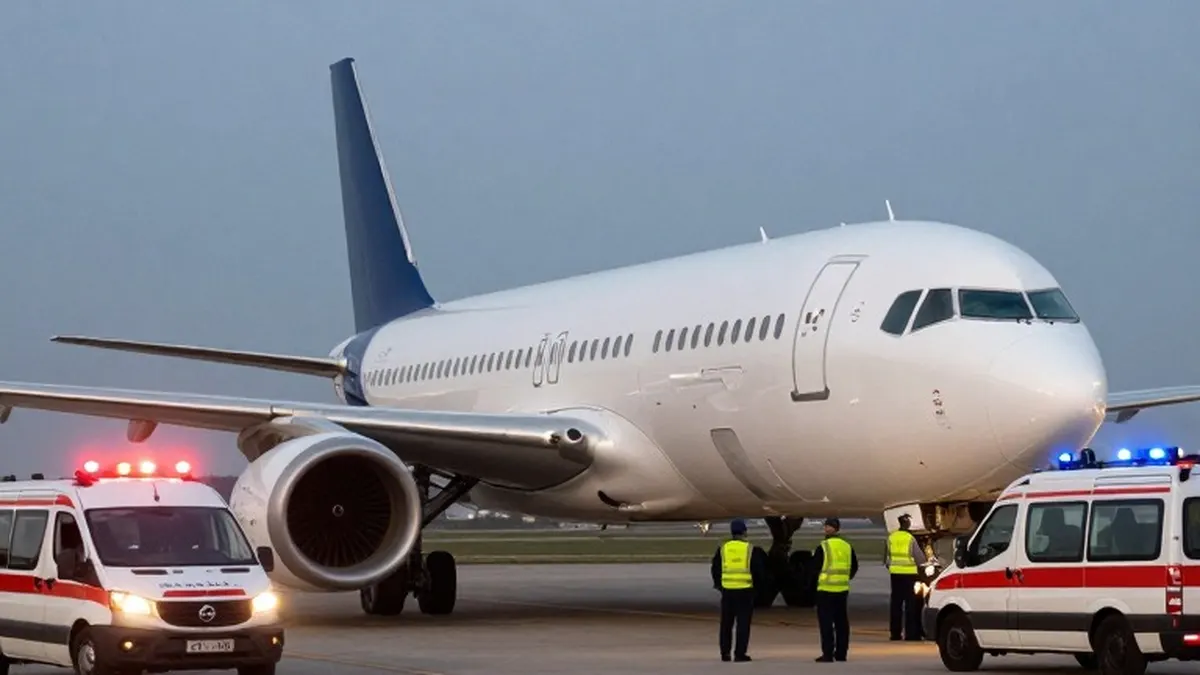
Bomb threats were made against roughly 10 European flights on Tuesday, prompting the brief closure of a Warsaw airport, the scrambling of air force jets in Italy, and security checks at airports across the continent, authorities said. No explosives were discovered despite extensive searches after the aircraft all took off and landed safely in various European cities within hours of one another.
Irish budget carrier Ryanair appeared to be the hardest hit, with four of its flights to different destinations targeted. London's Metropolitan Police confirmed it "was made aware of threats .. against four aircraft due to depart from or arrive at Heathrow Airport," one of Europe's busiest hubs, and said a further warning concerned a flight at Manchester Airport. Following checks, "no security issues were identified," the force added.
Two bomb warnings targeted planes bound for the Polish capital, according to Polish airport authorities: an SAS Scandinavian Airlines flight from Copenhagen and a Polish carrier LOT flight from Heathrow. Spanish airport operator Aena confirmed an emergency protocol was activated "due to a bomb alert" on a Ryanair flight that landed at 10:30am local time from Manchester in Murcia, southeastern Spain. The plane arrived without problems.
Other Ryanair services from Lisbon to Rome, Dublin to Rome, and Dublin to the Bulgarian capital Sofia also received warnings. Italian air force jets were scrambled to escort flight FR9611 from Dublin as it landed at Rome-Fiumicino at 10:45am, Rome Airport said in a statement. Anti-bomb procedures were also applied to an earlier Ryanair arrival at 9:40am. "Checks on passengers, luggage and the plane were all negative and the alert was lifted," the statement said.
In Bulgaria, a Wizz Air flight from Bergamo, Italy, was inspected after landing in Sofia following an alert, an interior ministry spokesperson told AFP. The wave of incidents followed a similar scare on Monday, when fighter jets were scrambled after a Wizz Air flight from London's Luton airport to Sofia was diverted by a bomb threat and forced to make an emergency stop in Budapest.
Hungarian Defence Minister Romulusz Ruszin-Szendi said on Facebook that NATO's air defence alert service had issued an alert for that flight. "The Hungarian Defence Forces' Gripen fighter jets took to the air within minutes and ensured the safe landing of the passenger aircraft in Budapest," he wrote.
Scandinavian Airlines said it could "confirm that a threat has been made against flight SK751 between Copenhagen and Warsaw," but the plane landed without incident. Warsaw's Chopin airport closed one runway while the aircraft underwent a security inspection that turned up no explosives.
The LOT flight, also scheduled to land at Chopin, was diverted to Warsaw Modlin, the capital's other airport. Authorities closed Modlin following the alert, but the Boeing 737 MAX landed safely. "Nothing was found," Modlin airport spokesman Adam Szablowski told AFP.
Matthew Borie, co-founder and chief intelligence officer of Osprey Flight Solutions, which advises airlines on flight threats, outlined several possible explanations for the unexplained incidents: a single threat sparking copycat cases, an individual or group making multiple threats, or "hybrid warfare" operations by state actors or their supporters. He said such threats were "not a new phenomenon" and come amid heightened geopolitical tensions and signs of disruption, including attacks on supermarket refrigeration systems, drone incursions in Europe and mysterious triggers of alert apps.
Borie said the focus on Europe means "there could be a Russian angle," while cautioning that "Iranian hybrid warfare is just as active in certain pockets of Europe as well." His advice to travellers was simple: "Don't be alarmed," pointing to "coordinated response mechanisms" by national authorities that at times include NATO fighter jets escorting threatened planes.
Source: France 24