Anthropic Employee Claims AI Proof of Riemann Hypothesis
A mathematician at Anthropic states that the company's Claude chatbot helped generate a proof for the century-old prime number problem, sparking debate over the role of AI in mathematics.
By Khalid Khalil ·
Levent Alpoge, an employee and mathematician at Anthropic, announced on Friday that he believes the company's artificial intelligence chatbot has successfully proven the Riemann hypothesis. This declaration came just one day after Anthropic made its debut on the US stock market. Alpoge stated that he spent approximately six weeks working with the Claude chatbot to develop a detailed proof for the complex mathematical problem.
The Riemann hypothesis is a nearly 170-year-old conjecture regarding the distribution of prime numbers. Named after the mathematician Bernhard Riemann, the theory suggests that prime numbers follow a determined order along the number line. Because prime numbers are fundamental to higher mathematics, a verified breakthrough in this area would have broad implications and be considered one of the most significant proofs in history. Alpoge described the potential discovery as "one dawn across science of something far greater."
The proof was generated using a non-public version of Anthropic's Claude model. Alpoge acknowledged that the timing of the announcement was coincidental with the company's public listing. He messaged Anthropic CEO Dario Amodei on Sunday to ask how he should handle the reveal. "The precise timing is horrible," Alpoge said, noting that he would have preferred to finish the work earlier. He added that while there is an obvious cynical view regarding the timing, it is false, and he felt a personal urgency to share the results before waiting any longer.
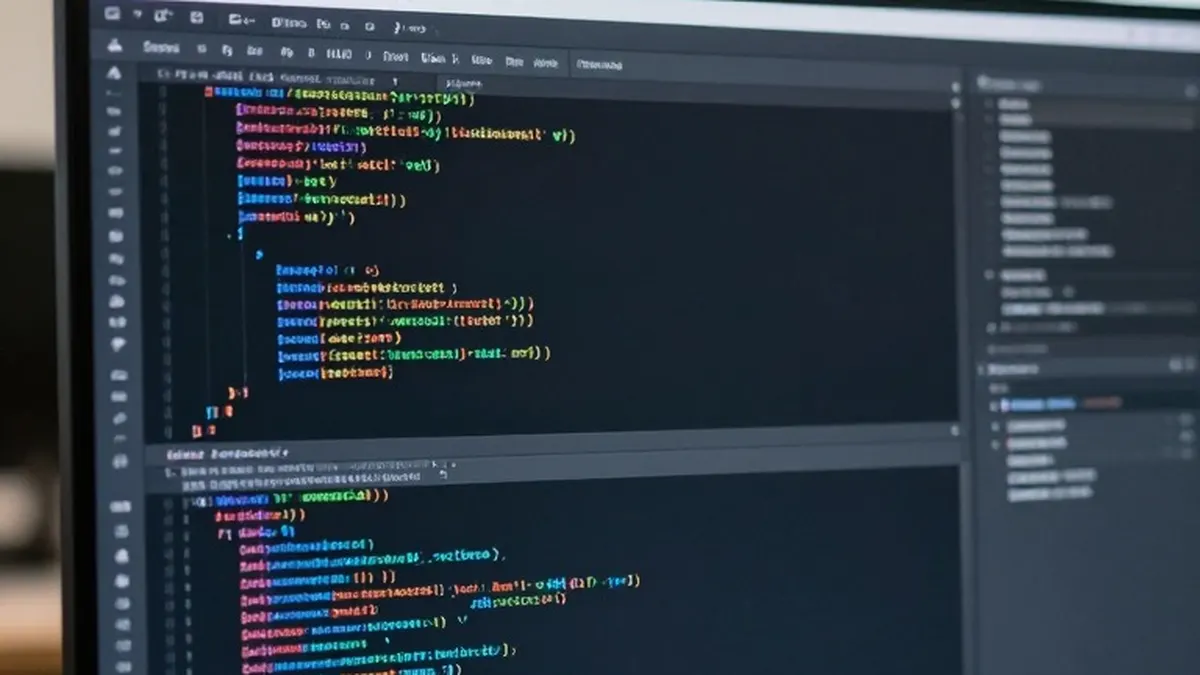
The complete proof, written in Lean, a computer language used for verifying mathematical proofs, consists of over 250,000 lines of code. Terrance Tao, a prominent mathematician, commented on the announcement by noting that the verification process is still in its early stages. "I imagine the digestion process will take some time, though in this case at least we have a human author to communicate with to assist with this task," Tao said. This distinction is notable because earlier AI-driven proofs released this year did not have a specific human author available for consultation.
This claim arrives during a period of increased activity from AI firms in solving high-level mathematical problems. In September, OpenAI reported that employees using a non-public version of its AI tools solved a part of the Navier-Stokes equations in just 88 hours. That specific problem concerns fluid dynamics and was tackled by more than 10,000 AI agents as a training exercise. The proof released by OpenAI has not yet been confirmed as accurate, which led to criticism from academic and mathematical communities regarding the use of AI in such contexts.
Anthropic has previously claimed progress in both mathematics and physics. However, a group of mathematics scholars recently argued that AI companies boasting of major solutions to demonstrate the sophistication of their commercial products is detrimental to the science of mathematics. In a group letter, they described the situation as a general threat to intellectual work, citing a misalignment between the purpose of AI and its outcomes.
The momentum in AI-assisted mathematics continued after that letter. One month later, OpenAI released what it claimed were solutions, proofs, or major progress on 372 additional outstanding higher mathematics problems. Experts expect it will take months, or possibly longer, to review those claims and establish their validity. The current situation highlights the growing intersection of artificial intelligence and traditional mathematical research, with the Riemann hypothesis proof now awaiting rigorous community verification.